House Refurbishment London
Whole-house refurbishments in London, every floor of the house renewed from the roof down, in the right order.
- Rated 4.9 from 31 reviews on MyBuilder
- UK guide: £43,530 to £110,350
- Free site survey, itemised quote
House refurbishment in London means renewing the whole fabric of a house you already own, or have just bought or inherited, while the rooms stay where they are. The wiring, pipework, heating, plaster, floors, stairs, joinery and windows are renewed or repaired, damp and timber faults are put right, and the house is decorated. It suits a Victorian or Edwardian terrace, an interwar semi or a postwar house that works as a plan but has worn out behind the walls. It is the usual route for an owner who plans to stay, the buyer of a dated house, a landlord re-letting a whole house or an executor preparing one for sale. This page covers scope, sequence, regulations, cost and choosing a builder. If you want walls moved or rooms joined, that is a renovation, and the structure is designed first.
For London, published UK figures put a three-bed house refurbishment at £43,530 to £110,350, and London houses usually cost more, with a London architect allowing £1,800 to £2,200 per square metre before VAT (Checkatrade and Bradley Van Der Straeten Architects, 2026). GS Renovation Ltd, a building contractor based in Potters Bar, does the work in London: we renew the wiring, pipework, heating, plaster, floors and joinery of the whole house under one contract, and a registered electrician certifies the rewire.
Price guide
| Work | Indicative range |
|---|---|
| Three-bed house refurbishment, UK average | £43,530 to £110,350 |
| Non-structural house refurbishment in London, per square metre, excluding VAT | £1,800 to £2,200 per square metre |
| Full rewire, two-bed to five-bed house | £4,500 to £10,500 |
| New heating system, three-bed house | £3,000 to £8,500 |
| Re-skim walls and ceilings, three-bed house | £5,000 to £12,500 |
Indicative ranges from published cost guides (Checkatrade, Bradley Van Der Straeten Architects and MyJobQuote, 2026), not a quotation. Most are UK-wide figures and London work usually costs more; a row marked London is a London figure. Prices checked September 2026. Full breakdown: House Rewire Cost.
Quick estimate from UK guide figures
Guide range: choose above
What does a London house refurbishment include?
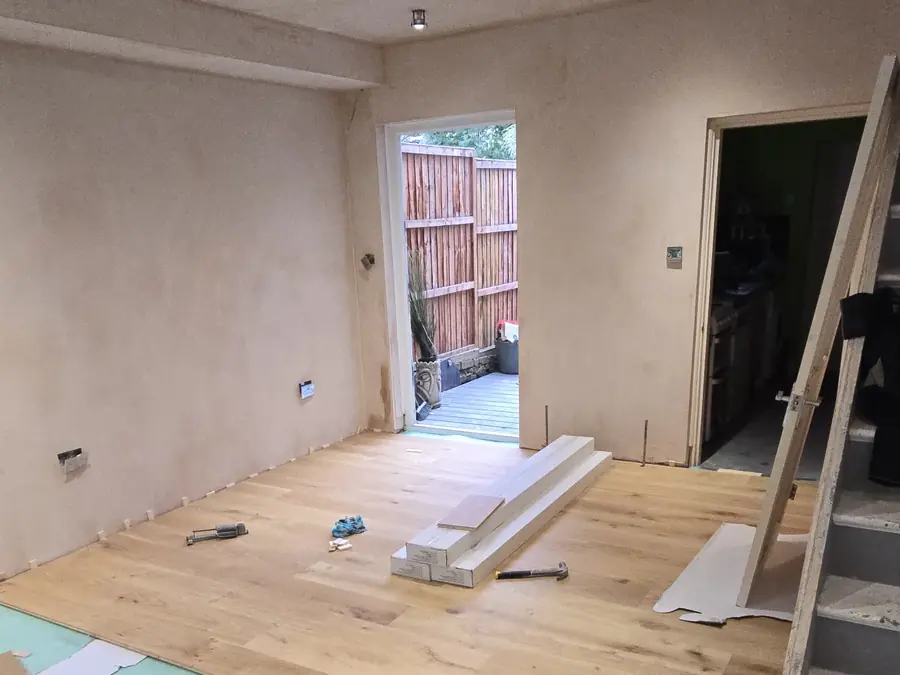
A London house refurbishment renews every system and surface in the house, from the incoming supplies to the last coat of paint. The usual scope is a full rewire, a replumb from the stopcock, new heating, plaster repaired or renewed, floors and joists made good, the staircase and joinery overhauled, the windows repaired or replaced, and full decoration. Damp and timber faults are traced and repaired while the house is open. Insulation goes in where a floor, wall or roof element is being renewed anyway. The roof, gutters and chimney stacks are included when the survey shows they are letting water in, because new plaster under a leaking valley gutter will not last a winter. The plan of the rooms stays as it is.
The age of the house decides how each element is treated. A Victorian or Edwardian terrace has solid brick walls, lime plaster, lath and plaster ceilings, suspended timber ground floors and box sash windows, and it needs materials that let the walls breathe. An interwar semi has cavity or early solid walls, a bay that often leaks at its roof and much altered heating. Its plaster is often gypsum finished, but lath and plaster ceilings are still common. A postwar house has lighter joinery, concrete ground floors in places and wiring that may be older than it looks. We survey the house room by room and record what each wall, floor and ceiling is made of, because a quotation that treats all three house types alike is a guess.
How a house refurbishment runs on site in London
A London house refurbishment runs in five stages: strip, first fix, plaster, second fix and finish. It starts with a survey that taps every wall and ceiling, checks the floors and traces the wiring, pipework and flues. The written, itemised quotation that follows names each provisional sum. In a house built before 2000, an asbestos refurbishment survey of the areas to be disturbed comes before strip-out, and anything found is removed by a licensed contractor or trained operatives, as the material requires. Strip-out takes out old wiring, pipework, failed plaster and worn floor coverings. Floorboards are lifted and numbered, and the joists and stair timbers beneath are inspected. First fix puts in the new cables, pipes and radiator tails, and the electrics are tested before anything is covered.
Plaster comes next, and never before the first fix, because chasing new plaster to add a cable wastes both jobs. Lath and plaster ceilings are repaired or taken down and boarded, and solid walls are replastered in lime where gypsum would trap moisture. The programme allows the weeks the plaster needs to dry before any paint goes on. Second fix brings the electrician and plumber back for sockets, switches, radiators, the boiler and sanitaryware. Floors are relaid, stairs are made firm, doors and skirtings are repaired and hung, and decoration comes last. The electrician, registered with a competent person scheme, tests and certifies the new installation, and a Gas Safe registered engineer commissions the boiler. A refurbishment that keeps the layout rarely needs a structural engineer.
Should you live in the house during a London refurbishment?
Moving out is usually the better choice for a whole-house refurbishment in London, because an empty house can be worked on every room at once. With nobody living there, the rewire and replumb run through the house in one pass, power and water can be off for days, and the plaster dries without cooking and showering adding moisture. The programme is shorter and the price reflects that. If you have to stay, the house is phased. One floor is finished and handed back first, or a kitchen and bathroom are kept working while the rest is stripped. Each phase repeats set-up, isolation and cleaning, so a lived-in job takes longer and costs more. Agree a written phasing plan before work starts.
A terraced London house also brings the street into the programme. Everything comes and goes through the front door and the hall, so the stairs and hall floor are protected on day one and stripped last. Roof, gutter and chimney repairs need scaffold, and on a terrace with no side access it usually stands on the pavement, which needs a council licence before it goes up. Next door hears work through a shared party wall. Noisy stages, such as chasing walls and hacking off plaster, stay inside the council's permitted hours, and neighbours on both sides are told their dates. An empty probate or pre-sale house needs its services reinstated and tested first, and its insurer told about the works.
Which regulations apply to refurbishing a London house?
Several parts of the building regulations apply to a London house refurbishment, though planning permission rarely does. A rewire, a new consumer unit or a new circuit is notifiable under Part P. An electrician in a competent person scheme normally self certifies it, with a building notice to the council as the fallback. The Gas Safe registered engineer who fits a new boiler notifies it. A fully renewed wet heating system should be designed under Approved Document L for a flow temperature of 55 degrees Celsius or lower, which usually means larger radiators. A G3 qualified installer normally self certifies an unvented cylinder, as a FENSA or Certass installer does replacement windows. Replastering more than half of an outside wall, or relaying more than half of a roof, is notified too, and Approved Document L then expects insulation where it is technically, functionally and economically feasible.
A listed house needs listed building consent for works inside and out that affect its character, and that can include like-for-like repairs. New windows or a front door of a new design can need planning permission. Rebuilding a chimney stack on the party wall, or cutting into it for joist bearings or a damp proof course, needs a party structure notice under the Party Wall etc. Act 1996. You serve it as building owner two months ahead, and we work to the consent or award. Repointing and new flashings usually fall outside the Act. Under CDM 2015, a buyer or owner whose work is not part of a business is a domestic client. The client duties pass to the contractor, or to the principal contractor where there is more than one, unless a written agreement gives them to the principal designer. A landlord refurbishing to let is a commercial client.
How much does a house refurbishment cost in London?
A three-bed house refurbishment costs £43,530 to £110,350 on Checkatrade's 2026 cost guide, a UK-wide figure. For London, Bradley Van Der Straeten Architects allow £1,800 to £2,200 per square metre, excluding VAT and fees, for existing parts of a house receiving mainly internal refurbishment. The two measure different things. Checkatrade averages a typical scope across the UK, while the London rate is an architect's construction cost allowance. Multiply it by your floor area and most London three-bed houses come out above the top of the UK range. A London quotation above £110,350 is not overpriced for that reason alone. One well below your floor area multiplied by £1,800, before VAT, may leave out work the house needs. All of these are indicative ranges, not quotations.
Element figures let you test a quotation line by line. MyJobQuote's 2026 national averages put a full rewire at £4,500 to £10,500 for a two-bed to five-bed house, and the same guide notes that London labour costs more. Checkatrade's 2026 UK figures put new heating at £3,000 to £8,500 and a re-skim of walls and ceilings at £5,000 to £12,500. The condition of the house moves the price more than the finishes do. Plaster that has to be hacked off rather than skimmed is the commonest example, followed by rotten joist ends, a lead supply pipe and a fuse board with no RCD protection. Asbestos adds a specialist removal stage, and roof repairs are priced separately. A sound quotation names each as a line, so a discovery becomes a decision.
What goes wrong on London house refurbishments, and how to choose a builder
London house refurbishments usually go wrong in one of two ways: the stages run out of order, or the work ignores how an old house handles moisture. Walls skimmed before the rewire, then chased again. New plaster over a wall still wet from a blocked gutter or a garden path raised above the damp proof course, so the stain returns within months. Gypsum and cement render on solid lime walls, trapping moisture. Sash windows ripped out when an overhaul would have saved them. Joists notched deeply to run new pipes, leaving a bouncy floor. Floorboards screwed down so nobody can reach the pipes again. A new boiler on old pipework nobody checked. Each one is hidden on handover day and costs more to reverse than to avoid.
Choosing a builder for a house refurbishment comes down to a few direct questions. Ask whether they tapped the walls, lifted a board and tested the circuits before pricing, or priced from a walk round. Ask which registered electrician will test and certify the rewire, and who notifies the boiler. Ask how they would treat lime plaster and original joinery in your house. Ask who is on site each week, whether those tradespeople work for the firm, and who answers when a problem appears. Ask to see every provisional sum named and priced before you sign, and for a written phasing plan if you are staying in. Agree how snags will be listed and put right before the final payment.
- Lime plastering on solid walls and lath and plaster ceiling repairs
- Whole-house refurbishments for landlords re-letting a house
- Sash boxes overhauled with new cords, parting beads and brush seals
Why Choose GS Renovation in London
We renew the wiring, pipework, heating, plaster, floors, stairs and joinery of a whole London house in the right order, for owners, buyers, landlords and executors, with one named contact from survey to handover. The founder, Abdelaaziz Saaid, has more than 30 years of hands-on experience. Every room is surveyed before we write your itemised quotation. Our own team carries out the building work. We coordinate the registered electrician and Gas Safe registered engineer who carry out and certify the electrical and gas work. Where the work is notifiable, we arrange the building control inspections. GS Renovation holds a 4.9 rating from 31 reviews on MyBuilder.
- Building control applications and inspections coordinated for you
- Radiators, sockets and switches positioned at first fix, never after decorating
- Damp traced to its source before anyone suggests an injected course
George always kept to commitments and arrived on time. He offered helpful suggestions during his initial visit and promptly provided a reasonably priced quote. The work started on time and George worked really hard every day. There were…
We loved working with George and Ibrahim and would highly recommend them. They have done splendid job on our new kitchen refurb which including new flooring, moving the services, installing RSJ and preparing space for new back doors…
Saaid is the best craftsman I have worked with. He knows what he is doing from the very beginning. He has a great knowledge of construction, fittings, appliances, installations. We are tenants and the landlord initially thought that to fit…
FAQ
Frequently Asked Questions about House Refurbishment London
Why do house refurbishment quotes in London differ so much?
Because they rarely price the same work. One quote includes making good, the electrician's certificate for the rewire and the Gas Safe sign-off on a new boiler; another leaves them as extras. Published UK figures of £43,530 to £110,350 for a three-bed house (Checkatrade, 2026) are a floor for London work. Compare London quotes line by line rather than by the total.
How much does it cost to refurbish a three-bed house in London?
A London three-bed of 90 square metres, for example, comes to roughly £162,000 to £198,000, excluding VAT and fees. That uses the 2026 London allowance of £1,800 to £2,200 per square metre from Bradley Van Der Straeten Architects. Checkatrade's 2026 UK-wide range for a three-bed is lower, at £43,530 to £110,350. The condition of the house decides where yours lands, and your figure follows a survey.
What is the difference between a house refurbishment and a renovation in London?
A refurbishment renews what the house already has, while a renovation changes the plan. Refurbishment covers the rewire, replumb, heating, plaster, floors, stairs, joinery, windows and decoration within the existing rooms. A renovation removes walls, joins rooms or adds space, which brings a structural engineer's design and more inspection. The survey settles which one you need.
What should executors sort out before refurbishing a probate house in London?
Executors should sort out insurance, services and security before any trade starts. Many policies restrict cover once a house stands empty, so tell the insurer about the vacancy and the works. The water may be drained down and the gas capped, so both are reinstated and tested first. Record keys, alarm codes and meter readings at handover.
Does rewiring a house in London need building control?
Yes. A full rewire, a new consumer unit or a new circuit is notifiable under Part P. An electrician in a competent person scheme normally self certifies the work, with a building notice to the council as the fallback. In a house the rewire runs while the boards are up and before any plaster, so it is tested before it is covered. Keep the certificates for when you sell.
Should I skim or replaster the walls in my London house?
Skim where the plaster is sound, with a lime finish on lime-plastered solid walls, and replaster only where it has lost its key. Tapping each wall finds the hollow areas, which are cut back to firm edges and patched. Walls hollow across most of their area are hacked off. Replastering more than half an outside wall is notified to building control and can bring Part L insulation duties.
Can I stay in my London house while it is refurbished?
You can, but the work takes longer and costs more. The house is phased so one floor, or a working kitchen and bathroom, stays usable while the rest is stripped. Power and water are then isolated in stages rather than all at once. Moving out lets every room be worked at the same time and lets plaster dry faster.
Should I repair or replace the sash windows in my London house?
Repair them where the boxes, sills and sashes are sound. An overhaul renews the cords, pulleys and beads, frees the sashes and adds brush seals, which stops most draughts and keeps the old glass. Rotten sill ends can be spliced with new timber. Replace only where the frames have failed, and check planning and listed building rules first.
Does a London house refurbishment include the roof and chimneys?
It includes them when the survey shows they are letting water in. New plaster under a slipped slate, a failed valley gutter or a cracked chimney stack will stain within a season, so those repairs come first, priced as separate lines. Rebuilding a stack that sits on the party wall needs a party structure notice, served by you at least two months ahead. Minor repairs such as repointing or new flashings usually do not.
Every Service, One Team
More GS Renovation Services in London
One team for every GS Renovation service in London:
Same Service, Nearby Areas
House Refurbishment Near London
We carry out house refurbishment across London and the surrounding areas. Explore a nearby location:
Ready to Start Your London Project?
Free, no-obligation quote for house refurbishment in London.