Key Takeaways
- A new central heating system costs roughly £3,500 to £8,000+ in London depending on scope (MyJobQuote, 2026).
- A three-bed semi with 9 to 11 radiators runs £4,500 to £7,000+ in London, against £3,800 to £5,800 in Manchester.
- The boiler is the biggest single item at £1,800 to £3,000 supplied and fitted in London; a combi unit alone is £500 to £2,800.
- Radiators cost £80 to £300 each; budget £800 to £2,000 for a full set.
- Only a Gas Safe registered engineer may work on gas, and you must get a Benchmark checklist or the warranty is void.
- Booking in summer typically saves 5 to 10% against peak winter rates.
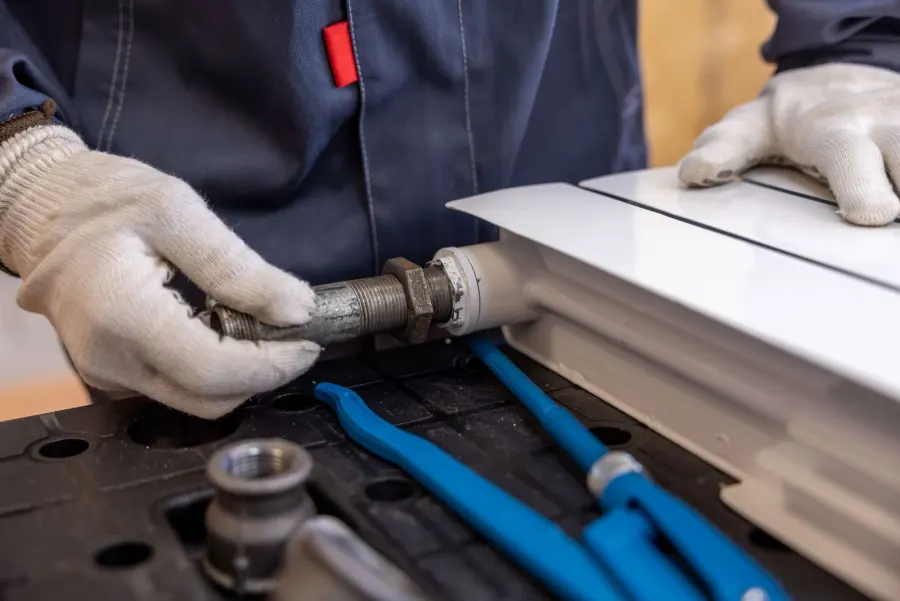
Whether you are replacing a tired system or fitting central heating for the first time, it is a significant investment that affects comfort and bills for years. This guide covers what a new central heating system costs in London in 2026, broken down by component and by property, plus the certification you must be handed at the end.
How much does central heating cost in London?
A new central heating system in London costs roughly £3,500 to £8,000 or more, depending on the boiler, the number of radiators and the pipework, according to MyJobQuote. The national average for a full system is around £4,250 over four to eight days on site; London runs above that, with a three-bed semi of 9 to 11 radiators typically £4,500 to £7,000.
| Component | Typical cost | Time on site |
|---|---|---|
| New boiler, supplied and fitted in London | £1,800 to £3,000 | 1 to 2 days |
| Combi boiler (unit only) | £500 to £2,800 | included above |
| System boiler (unit only) | £1,000 to £2,500 | included above |
| Radiators, set of 9, supplied and fitted | £1,200 to £1,750 | 1 to 2 days |
| Pipework, supplied and installed | £950 to £1,200 | 3 to 5 days |
| Controls (programmer, smart thermostat) | £200 to £800 | a few hours |
| Heating engineer day rate | £170 to £310 | plus a London premium of £250 to £550 on the job |
What does it cost by property size?
The radiator count is the single most useful number for pricing a heating job, and it tracks property size closely. These are national ranges; add the London premium of roughly £250 to £550 on labour.
| Property | Radiators | Full system cost |
|---|---|---|
| Flat or apartment | 6 to 8 | £3,000 to £4,500 |
| Bungalow | 6 to 8 | £2,500 to £3,500 |
| Terraced house | 8 to 10 | £3,500 to £5,000 |
| Semi-detached | 10 to 12 | £4,000 to £6,000 |
| Detached | 12 to 15+ | £5,000 to £7,500+ |
Timing matters more than people expect. Heating work is seasonal, and installers discount to fill the summer. Booking between May and August typically costs 5 to 10% less than the same job in December or January, when demand pushes prices 10 to 20% above the spring baseline.
Which boiler type do you need?
The boiler is the largest single cost and the decision that shapes everything else in the system.
- Combi (£500 to £2,800 for the unit). Heats water on demand with no cylinder or tanks, so it frees up a cupboard. Right for a flat or a house with one bathroom. Its weakness is flow rate: a combi can only deliver what the incoming mains gives it, and in parts of London mains pressure will not run two showers at once.
- System (£1,000 to £2,500 for the unit). Works with a pressurised cylinder, so hot water is stored and several outlets can run together. This is the right answer for most three and four-bed houses with two bathrooms, and the usual choice if you may fit a heat pump later.
- Regular or heat only (£1,300 to £2,700 for the unit). Needs a cylinder plus a feed and expansion tank in the loft. Usually retained rather than chosen, in older homes where replacing the whole layout is not worth the disruption.
Our new boiler cost guide covers the unit prices in detail, and the choice between boiler types is worth making property by property.
Gas Safe, Boiler Plus and the Benchmark certificate
Only a Gas Safe registered engineer may legally work on gas appliances or pipework in the UK. Ask to see the ID card and look at the back of it, which lists exactly what that individual is qualified to do. Being registered as a company is not the same as the person on your job being qualified for boilers.
Two pieces of paper matter at handover:
- The Benchmark commissioning checklist, found in the back of the boiler manual. The engineer completes it at commissioning, recording gas pressures, flue integrity and combustion readings, and hands it to you. If it is blank, the manufacturer's warranty is invalid. The boiler should also be registered with the manufacturer within a month of installation.
- The Building Regulations compliance certificate. A new boiler is notifiable work, and a Gas Safe registered installer notifies Building Control through the competent person scheme and arranges the certificate. Keep it with the Benchmark checklist, because a buyer's solicitor will ask for both.
There is also a minimum standard for the equipment. Under Boiler Plus, in force in England since April 2018, a new gas boiler must be at least 92% ErP efficient and be fitted with time and temperature controls. A combi installation must additionally include one of four measures: flue gas heat recovery, weather compensation, load compensation, or smart controls with automation and optimisation. If a quote does not name which one, ask.
Radiators and controls
Modern radiators cost £80 to £300 each, so budget £800 to £2,000 for a full set in a three-bed, or £1,200 to £1,750 supplied and fitted for a set of nine. Designer and column radiators cost considerably more and are worth pricing individually rather than assuming a standard set.
Sizing is what actually matters. Radiators should be sized against each room's heat loss, not eyeballed from what was there before, and every radiator should have a thermostatic valve except the one in the room with the thermostat. Smart controls at £200 to £800 pay for themselves faster in a house with an irregular occupancy pattern than in one that is occupied all day. Underfloor heating is a good alternative on a ground floor being rebuilt anyway, and each has rooms where it wins.
First-time heating and conversions
Installing central heating from scratch, or converting from a gravity-fed system, costs more because new pipework has to be run through the house. Pipework alone is £950 to £1,200 and three to five days of the programme, and in an occupied house it means lifting floors in every room. Expect £5,000 to £11,600 for a first-time install in a three-bed, averaging around £8,000.
Do it while floors are up. Sequencing heating alongside a rewire and before flooring and decoration in the order of works saves the cost of doing the same disruption twice.
What is commonly missing from a quote?
Heating quotes are where the extras hide. Before you compare two prices, check both include:
- A powerflush or chemical clean of the existing system, and a magnetic filter on the return.
- The gas supply pipe. Older London houses often have a 15mm run from the meter that a modern boiler needs upgrading to 22mm. This is one of the most common mid-job surprises.
- Flue work, including extensions, roof terminals and any scaffolding or access at height.
- Condensate drainage to a proper waste rather than an external pipe that freezes.
- Removing the old cylinder and loft tanks, plus taking the waste away.
- Lifting and relaying floorboards or flooring, and making good plaster and decoration afterwards.
- Thermostatic valves on every radiator, which are frequently priced as an extra.
- The Benchmark checklist and Building Regulations certificate, confirmed in writing.
Allow one to two days for a straight boiler swap, four to eight days for a full system and up to ten for a first-time install. GS Renovation coordinates heating upgrades as part of home renovations across London, with every gas connection and the boiler itself fitted by a Gas Safe registered engineer, and sequences the work so floors come up once. For a free quote, contact us or call 07472 424 226.