Key Takeaways
- A new boiler fitted in London typically costs £1,800 to £3,000, rising to £5,000 where an old back boiler comes out (PriceYourJob and MyJobQuote, 2025 to 2026).
- The unit alone is £500 to £2,800 for a combi, £1,000 to £2,500 for a system boiler and £1,300 to £2,700 for a conventional one.
- Output follows bathrooms and radiators, not floor area: roughly 24 to 27kW for a one or two-bed, 28 to 30kW for a three-bed, 35kW and above for four beds with two bathrooms, where a combi suits at all.
- Converting a conventional system to a combi adds around £2,500 of labour and parts, and removing an old back boiler roughly £1,000 more.
- Only a Gas Safe registered engineer may fit it, and you must be handed a completed Benchmark checklist or the manufacturer's warranty is void.
- Under Boiler Plus, every new combi in England needs one of four extra efficiency measures. If the quote does not name which one, ask.
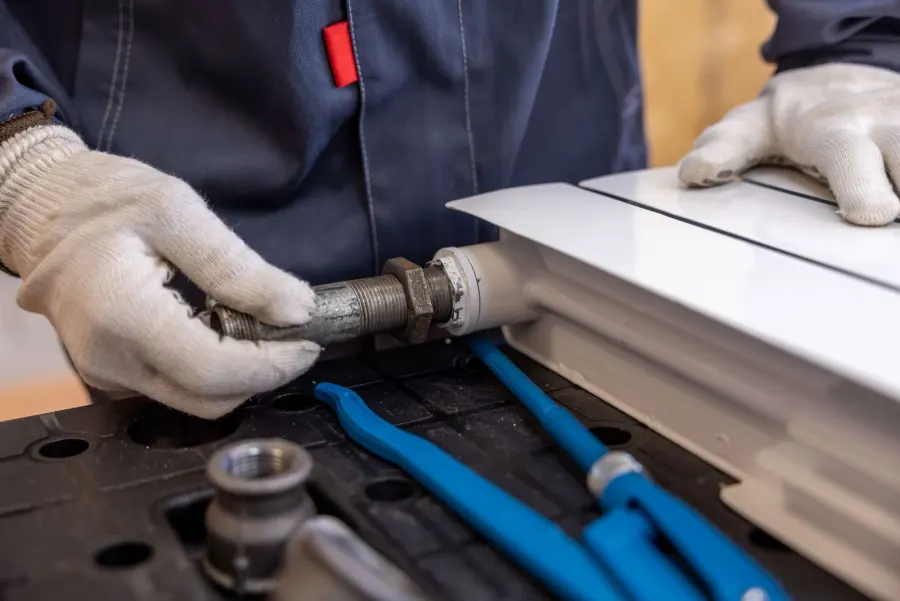
A new boiler is often part of a wider renovation, and getting the type and position right pays off in comfort and running costs for years. Here is what a new boiler costs in London in 2026, how to size it, and the two certificates you should be holding when the engineer leaves.
How much does a new boiler cost in London?
A new boiler fitted in London typically costs £1,800 to £3,000, from around £1,800 for a like-for-like combi swap onto a sound existing system to £5,000 where an old back boiler has to come out and a combi goes in, as in the table below. The national supply-and-fit average sits at £2,000 to £3,000, and London sits at the top of that band and above it, because labour, parking and access all cost more here.
Read any boiler quote as three parts that move independently: the unit, the labour, and the work done to the rest of the system while the engineer is there.
| Scenario | Typical London cost, fitted | Time on site |
|---|---|---|
| Like-for-like combi swap, same position | £1,800 to £2,500 | 1 day |
| Combi swap plus a power flush and new valves | £2,400 to £3,200 | 2 days |
| System boiler with a new cylinder | £2,500 to £3,500 | 2 to 3 days |
| Combi moved to a new position | £2,800 to £3,800 | 2 days |
| Conventional system converted to a combi | £3,000 to £4,500 | 2 to 3 days |
| Back boiler removed and combi fitted | £3,500 to £5,000 | 3 days |
| Power flush on its own | from £300 | half a day to a day |
What does the boiler itself cost?
The unit is usually a quarter to half of the total, and its price tracks output and warranty length more than anything else. Budget brands start around £500 to £800 supply only with a five-year warranty; the well-known names with 10 or 12-year warranties run £1,000 to £2,800.
| Boiler and output | Suits | Supply only |
|---|---|---|
| Combi, 24 to 27kW | One or two-bed flat, one bathroom | £600 to £800 |
| Combi, 28 to 30kW | Three-bed house, one bathroom | £500 to £1,000 |
| Combi, 35 to 45kW | Four-bed, two bathrooms, only where the mains flow rate allows; otherwise a system boiler | £700 to £1,500 |
| Premium combi, any output | Where a 10 to 12-year warranty matters | £1,200 to £2,800 |
| System boiler, 18 to 30kW | Houses with a cylinder and two or more bathrooms | £1,000 to £2,500 |
| Conventional or heat only, 15 to 30kW | Older systems keeping the loft tank and cylinder | £1,300 to £2,700 |
Size it on demand, not on floor area. A combi's output governs the flow rate at the tap, so bathrooms and mains pressure decide it. An oversized boiler is not a safety margin: it short cycles, wears faster and runs less efficiently. Any competent engineer counts radiators and asks about showers before naming an output.
Which boiler type should you choose?
For most London flats and smaller houses the answer is a combi, but the exception matters more than the rule.
- Combi boiler. Heats water on demand with no cylinder or loft tanks, which frees a cupboard and suits flats and one-bathroom houses. Its limit is flow rate: a combi can only deliver what the mains gives it, and in parts of London that will not run two showers at once whatever boiler you fit. Ask for the measured flow rate in litres per minute first.
- System boiler. Works with a pressurised cylinder, so hot water is stored and several outlets can run together. The right answer for most three and four-bed houses with two bathrooms, and the sensible choice if you may fit an air source heat pump later, since the cylinder carries over.
- Conventional or heat only. Needs a feed and expansion tank in the loft as well as a cylinder. Usually retained rather than chosen, in period properties where replacing the whole layout is not worth the disruption.
The choice between boiler types is worth working through property by property, and the central heating cost guide covers radiators, pipework and controls.
Gas Safe, Boiler Plus and the Benchmark certificate
Only a Gas Safe registered engineer may legally work on gas appliances or pipework in the UK, and registration is held by the individual as well as the business. Ask to see the ID card and turn it over: the back lists which appliance types that person is qualified for. A firm being registered does not mean the person in your kitchen is signed off for boilers.
Two documents should be in your hands at handover.
- The Benchmark commissioning checklist, which is bound into the back of the boiler manual. The engineer fills it in at commissioning, recording gas pressures, flue integrity and combustion readings, and signs it. A blank Benchmark invalidates the manufacturer's warranty. The boiler should also be registered with the manufacturer within 30 days.
- The Building Regulations compliance certificate. Fitting a boiler is notifiable work under Part L. A Gas Safe registered installer self-certifies through the competent person scheme, notifies Building Control and the certificate follows by post or email. Keep both documents together, because a buyer's solicitor will ask for them when you sell.
There is also a minimum standard for what may be installed. Under Boiler Plus, in force in England since April 2018, a new gas boiler must be at least 92% ErP efficient and fitted with time and temperature controls. A combi installation must additionally include one of four measures: flue gas heat recovery, weather compensation, load compensation, or smart controls with automation and optimisation. Which one is a real choice with cost implications, so ask before you accept a quote. See our building regulations guide for the wider picture.
What pushes the price up or down?
Position and pipework, far more than brand. What moves a boiler quote by four figures:
- Moving the boiler. Relocating to a loft or utility means new gas, water, condensate and flue runs plus making good, which roughly doubles the labour.
- The gas supply pipe. Plenty of older London houses have a 15mm run from the meter that a modern boiler needs upgraded to 22mm. The most common mid-job surprise.
- System condition. A sludged system needs a power flush first, otherwise debris blocks the heat exchanger and the warranty claim is refused.
- Flats and freeholders. Managing agent consent, restricted hours, flue routes to a roof terminal and a lift booking all add days.
- Season. Installers discount to fill the summer, so the same job in June often costs 5 to 10% less than in December.
What is commonly missing from a quote?
Before comparing two boiler prices, check both cover the same scope. These separate a cheap quote from a complete one.
- A power flush or chemical clean and a magnetic filter fitted on the return.
- Thermostatic valves on every radiator except the one in the room with the thermostat.
- The gas supply pipe upgrade, and condensate drainage into a proper internal waste rather than an external pipe that freezes in January.
- Removing and disposing of the old boiler, cylinder and loft tanks, and making good afterwards. Lifting floorboards, plastering, boxing in and touching up decoration are frequently excluded.
- The Boiler Plus measure and the certificates, named explicitly and confirmed in writing.
Should you replace it during your renovation?
Yes, if the boiler is over 10 to 15 years old or you are reconfiguring the house, because pipework changes and repositioning happen while walls and floors are already open. Doing it later means lifting the same floors twice and making good twice. It sits early in the order of works, alongside first fix plumbing and electrics.
A modern condensing boiler is far more efficient than a unit from the mid-2000s, which shows up on the bills and the EPC rating. If you are weighing gas against low carbon heating, note that the £7,500 Boiler Upgrade Scheme grant does not apply to a replacement gas boiler. GS Renovation includes heating upgrades in home renovations across London and in full house refurbishments. We are not Gas Safe registered ourselves: on our jobs the boiler is fitted and commissioned by a Gas Safe registered engineer we appoint, whose ID card you can check as described above, and the Benchmark checklist and compliance certificate come from that engineer. For a quote, contact us or call 07472 424 226.