Key Takeaways
- A localised repair typically costs £400 to £900; joists and subfloor together run £1,000 to £2,000+.
- Rot almost always starts at the joist end, where the timber bears into a damp external wall.
- A bouncy floor is usually deflection rather than failure, but it is worth establishing which before laying tiles on it.
- Notches cut over a bearing by earlier plumbing work are the commonest defect found once boards come up.
- Fix the damp before the timber. Replacing a rotted joist end without curing the cause simply restarts the clock.
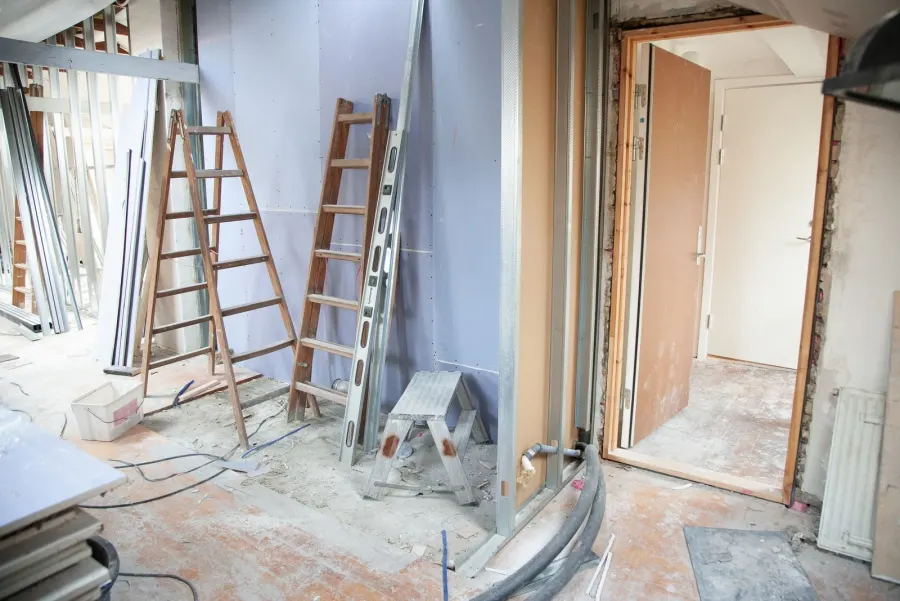
Floor joists fail quietly. The first sign is usually a floor that moves more than it should, or a musty smell in one corner of a room, and the cause is nearly always water reaching timber that was never designed to stay wet.
What are the signs of a failing floor joist?
A floor that bounces or dips underfoot, particularly near an external wall. Gaps opening between the skirting and the floor. Doors that have started to catch on the floor rather than the frame. A musty smell in one corner. In bad cases, a springiness that makes glasses ring in a cabinet when someone walks past.
Lift a board near the external wall if you can, because that is where the story usually is. On a suspended timber ground floor, look at where the joist end disappears into the wall and at the airbricks outside. On an upper floor, look under the bathroom, because a slow leak from a waste pipe is the commonest single cause of rot in an upstairs joist.
Distinguish rot from deflection. Rot is the timber failing and it needs repair. Deflection is the timber flexing within its capacity, which is uncomfortable rather than dangerous but matters a great deal if you are about to lay stone or large format tiles over it.
Why do joists fail?
- Wet rot at the bearing, where the joist end sits in a solid external wall that is carrying moisture
- Blocked or built over airbricks, so the void under a suspended ground floor stops ventilating and stays damp
- Ground levels raised outside above the damp proof course, which is the same cause as most rising damp complaints
- A long running leak from a bathroom waste, shower tray or radiator valve on the floor above
- Notching and drilling by earlier trades, especially deep notches cut directly over a bearing where the timber is doing the most work
- Undersized or overspanned joists, common in Victorian terraces against modern expectations
- Woodworm or, far less often but far more seriously, dry rot spreading through masonry as well as timber
The notching one is worth dwelling on. Generations of plumbers and electricians have cut through joists to run pipes and cables, and a notch in the wrong place removes a large share of the joist's strength. It is the single most common defect found once boards come up, and it is repairable.
Because the cause is nearly always water, the sequence matters. Read our guide to damp causes and fixes and to telling condensation from damp before assuming the timber is the whole job.
What does floor joist repair cost?
A localised repair, meaning one or two joists or a set of joist ends, typically runs £400 to £900. Replacing joists and the subfloor across a room is £1,000 to £2,000 or more.
| Job | What it covers | Typical cost |
|---|---|---|
| Localised joist repair | One or two joists, or repairing rotted joist ends | £400 to £900 |
| Joists and subfloor, per room | Larger area, depending on room size and damage | £1,000 to £2,000+ |
| Carpenter, hourly | Labour rate, varies by region | £25 to £35 per hour |
| Small repair, one day | Labour only, materials extra | £200 to £280 |
| Two workers, several days | Larger structural repair | £800 to £1,100 |
What pushes a job past these figures is what the boards reveal. Rot that has reached the wall plate, an infestation that needs treating, or a floor that turns out to be undersized rather than damaged all change the scope. A contractor who prices a joist repair without lifting a board first is guessing, and you will meet the difference as a variation later.
How are floor joists repaired?
Rarely by replacing the whole joist, because getting a full length timber into an existing floor usually means taking out more than the defect justifies.
- The cause of the moisture is found and dealt with first, whether that is a leak, a blocked airbrick or an external ground level
- Rotted ends are cut back to sound timber and the floor is temporarily supported while that happens
- New timber is sistered alongside the existing joist and bolted through, which is the usual repair for both rot and notching damage
- Joist hangers or a new bearing are used where the end can no longer sit in the wall, keeping the timber out of contact with damp masonry
- Notched joists are reinforced with steel plates or sistered timber rather than simply filled
- Where deflection is the issue rather than damage, noggins or a mid span support reduce the bounce
- The void is ventilated properly again, because a repair in an unventilated void will rot in turn
Structural alterations to a floor are notifiable, so building control inspects work that changes how the floor is supported. Where the joists bear into a shared party wall, the Party Wall etc. Act 1996 may apply as well, as set out in our Party Wall Act guide.
Can you tile over a bouncy floor?
Not without dealing with the bounce first. Large format tiles and stone are unforgiving of deflection, and a floor that feels lively underfoot will crack grout lines within a season and tiles soon after. This is the commonest reason a bathroom or kitchen refit turns into a structural job halfway through.
The fix is stiffening the floor before the finish goes on: sistering, noggins between joists, or a mid span support where there is somewhere to put one, then a decoupling layer under the tile. It costs a fraction of relaying a cracked stone floor. If you are planning a Victorian terrace renovation where the joists are original, budget for finding this rather than hoping.