Key Takeaways
- Repointing a stack averages about £750, with a range of £500 to £2,000.
- Rebuilding the stack above the roofline costs £1,000 to £3,500; a full rebuild can reach £10,000.
- Removing the stack above the roof runs £1,500 to £3,500, or £260 to £340 per metre.
- Most of the cost is access. Scaffolding a stack is a large share of any quote, so do all the roof work in one visit.
- Leaning stacks and damp on the chimney breast inside are the two signs that stop this being routine maintenance.
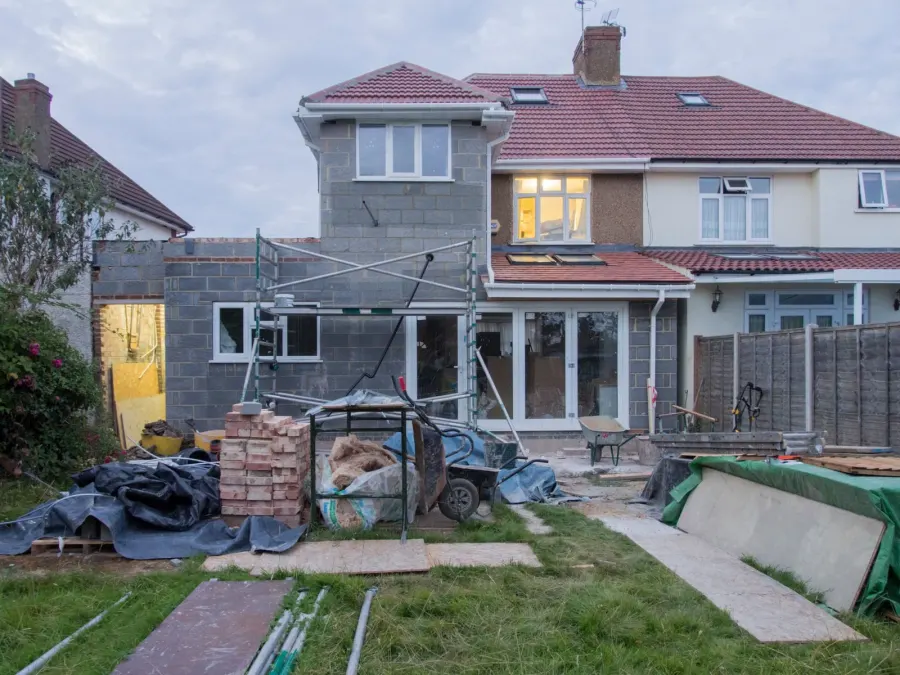
A chimney stack sits in the most exposed position on the building and is usually the last thing anyone looks at. By the time it becomes obvious from the ground, the choice is normally between repointing it, rebuilding the top of it, or taking it down.
How do you know a stack needs work?
From the ground, with binoculars, on a clear day. You are looking for mortar joints that have eroded back from the face of the brick, bricks whose faces have blown off after frost, a stack that leans, a chimney pot sitting loose, and lead flashings that have lifted or torn where the stack meets the roof.
From inside, the signs arrive as damp. A tide mark on the chimney breast in the top floor bedroom, staining in the loft around where the stack passes through, or salts crystallising through fresh plaster are all the same story: water is getting into the stack and travelling down through it. That is why chimney work often gets discovered during a damp investigation rather than a roof one.
Two findings change the urgency. A stack that visibly leans is a safety matter rather than a maintenance one. Loose or cracked pots above a pavement or a neighbour's roof are the same. Everything else is usually a job you can plan for the next dry spell.
What does chimney stack repair cost?
Repointing averages about £750. Rebuilding the section above the roofline is £1,000 to £3,500. Removal runs from £1,500 for the stack alone to £6,800 for stack and breast together.
| Job | What it covers | Typical cost |
|---|---|---|
| Repointing the stack | Raking out and repointing eroded joints | £500 to £2,000, average £750 |
| Partial rebuild | Rebuilding a damaged section rather than the whole stack | £600 to £1,000 |
| Rebuild above the roofline | Taking the stack down to the roof and rebuilding it | £1,000 to £3,500 |
| Full stack rebuild | Larger or more complex stacks, extensive work | £2,000 to £10,000+ |
| Removal above the roofline | Stack taken down and the roof made good | £1,500 to £3,500 |
| Removal, stack and breast | Full removal including internal making good | £4,400 to £6,800 |
| Priced by height | Stack removal charged per metre | £260 to £340 per metre |
Scaffolding is the reason these numbers look high for what is a small amount of brickwork. Once a scaffold is up, the marginal cost of doing the other roof jobs is small, so it is worth pricing repointing, flashings, pots and any roof covering work as one visit rather than three.
Repair, rebuild or remove?
The test is how much of the brickwork is still sound and whether the stack is still doing a job.
- Joints eroded but bricks sound, stack plumb: repoint, and expect another few decades from it
- Frost damaged brick faces over part of the stack, the rest sound: partial rebuild of the damaged section
- Leaning, or brickwork failed through most of its height: rebuild above the roofline, reusing sound bricks where possible
- No working flue, no plan to reinstate one, and the stack in poor condition: removal is often the honest answer
Removal deserves more thought than it usually gets. Taking the stack off removes the maintenance permanently, but it also loses the option of a working fireplace, changes the roofline, and on a terrace it involves a stack that is usually shared. In a conservation area the roofline is part of what the designation protects, and on a listed building removal is consentable work in its own right.
What about a shared stack on a terrace?
Most London terraces and semis have a stack that sits on or straddles the party wall and serves both houses. That makes it a party structure, so work on it engages the Party Wall etc. Act 1996 and notice must be served on the adjoining owner before anything starts. The duty to serve sits with you as the building owner, not with the contractor.
There is a practical point too. The withes, the thin brick divisions between adjacent flues inside the stack, are often only half a brick thick and soft with age. Careless work on your side can break into your neighbour's flue, which shows up later as smoke crossing between houses. The condition of those divisions gets checked before anything is cut.
Where you are removing the breast inside as well, that is a separate structural job with its own support requirements, covered in our chimney breast removal guide. Since 2024 a steel beam is the more common support route, because LABC withdrew its standard gallows bracket detail.
Do you need approval for chimney work?
Repointing and flashing repairs are maintenance and need nothing. Rebuilding a stack is usually treated as like for like repair, though building control will want to be involved if the structure or the flue arrangement changes. Removing a stack or a breast is notifiable structural work, because something has to support what remains, and building control inspects it.
Any flue that stays in place needs to be capped in a way that keeps rain out while still allowing air to move, otherwise the stack stays damp and the problem reappears inside. Any flue you intend to use again needs sweeping and testing before it is relied on. Our building regulations guide sets out which stages get inspected.