Key Takeaways
- The costliest mistake is no contingency. Allow 10 to 15% of build cost, and 20% in a pre-1919 London house.
- A builder's quote is not your budget. Professional fees add 10 to 20% and VAT adds 20% on most work to an existing home.
- Assuming permitted development is a London trap: Article 4 directions and conservation areas remove those rights street by street, and flats never had them.
- A lawful development certificate costs £274 (Planning Portal, 2026) and settles the question a buyer's solicitor will ask.
- Never economise on wiring, drainage, damp or structure. Finishes can be upgraded later, what sits behind the plaster cannot.
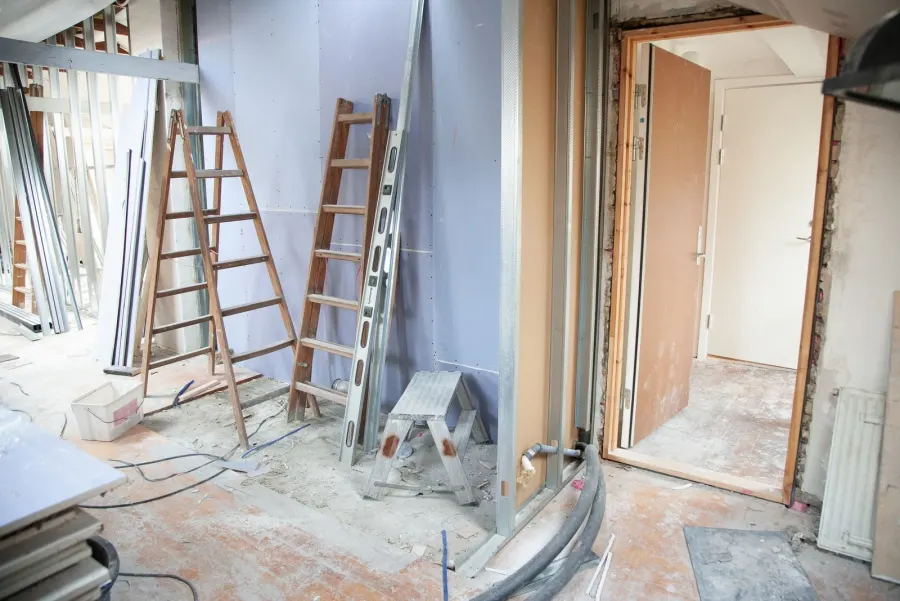
The most common renovation mistakes are budgeting from the builder's quote rather than the true cost, choosing on headline price, assuming permission you do not have, and cutting corners on what gets buried behind plaster. Here are the ten we see repeatedly on London projects, and what each costs when it goes wrong.
What are the most common renovation budget mistakes?
Treating the builder's quote as the budget. The quote covers the build, and the build is not the whole cost.
Mistake 1: no contingency. Set aside 10 to 15% of build cost, and 20% in a pre-1919 house. Lifting floorboards in a Victorian terrace routinely turns up perished wiring, lead pipework, sagging joists and damp behind the skirting. The contingency is what lets you deal with that without stopping the job.
Mistake 2: budgeting from the quote alone. The items below are real costs on almost every London project and sit outside most builders' quotes.
| What the quote usually leaves out | Typical London cost | Notes |
|---|---|---|
| Contingency | 10 to 15% of build cost | 20% on a pre-1919 property |
| Design, structural engineer and surveys | 10 to 20% of build cost | Higher where a steel beam is involved |
| VAT | 20% | Most work to an existing home is standard rated |
| Householder planning application | £548 | England, from 1 April 2026 |
| Lawful development certificate | £274 | Your proof for a buyer's solicitor later |
| Party wall surveyor, if a neighbour dissents | £900 to £1,200 | Per adjoining owner, agreed surveyor |
| Skips, scaffold and parking suspensions | Borough dependent | Charged per bay per day and set by each council |
Mistake 3: choosing on price alone. The cheapest of three quotes is usually the one with the least in it. On a London bathroom, where labour is 45 to 60% of the total, a quote thousands below the others is pricing fewer days on site, not a better deal. Compare scope line by line and ask each contractor how many days they have allowed. See how to choose a builder in London.
Which planning mistakes cause problems when you sell?
The three below, and each surfaces years later when a buyer's solicitor asks for paperwork you never obtained.
Mistake 4: assuming permitted development applies. It often does not in London. Article 4 directions withdraw those rights street by street, conservation areas restrict front elevations, windows and roofs, and listed buildings need consent for work trivial elsewhere. Flats have none at all. Check the council's map before you brief a designer.
Mistake 5: not getting the certificates. Building Regulations approval, a completion certificate and a Part P certificate for the electrics prove the work was done properly. If the job was genuinely permitted development, spend the £274 on a lawful development certificate anyway. See building regulations and planning permission in London.
Mistake 6: leaving the party wall late. Notice periods are statutory, so this cannot be rushed. A terraced or semi-detached house means one or two adjoining owners, and if they dissent you pay £900 to £1,200 per adjoining owner for an agreed surveyor. See the Party Wall Act explained.
Where should you never cut corners?
On anything you cannot reach again without breaking something. Finishes are easy to upgrade in five years. Wiring, drainage, waterproofing and structure are not.
Mistake 7: economising on what gets buried. While the floor is up and the walls are open, that is the moment to rewire, replace pipework, tank the wet areas and deal with the damp. Doing it later means taking the new finishes back off.
Mistake 8: getting the order of works wrong. Structure, then services, then plaster, then finishes. Decorating before plaster has dried, or laying floors before second fix, guarantees rework. See the order of works.
Mistake 9: changing your mind mid-project. Scope creep is the biggest single source of overspend and dispute. Price and agree every variation in writing before the work is done, which is what a renovation contract is for.
Mistake 10: over-improving past the street ceiling. Nationwide's 2025 research puts an extra bathroom at around 4% and a loft or extension adding a double bedroom and bathroom at up to 24%. Those are percentages of your home's value, so they only pay back where the street supports the finished figure. Spend £120,000 on a house in a road where nothing sells above £700,000 and the last £40,000 buys enjoyment, not equity. See which renovations add the most value.
The mistakes specific to London houses
- Underestimating the age of the stock. Much of London is pre-1919: solid walls with no cavity, lath and plaster ceilings and floors level in no direction. Modern impermeable materials on a solid wall trap moisture and make damp worse.
- Ignoring access. A skip needs a permit, pavement scaffold a licence, and a parking suspension is charged per bay per day. On a narrow terraced street every delivery costs time that lands in the labour bill.
- Forgetting the lease. In a flat the freeholder's consent is usually required and takes weeks. Start it before you book a contractor. See adding value to a London flat.
Then finish properly: plan lighting and storage at design stage while both are cheap, and work through a snagging list before releasing the final payment.
GS Renovation handles planning, building control and party wall matters on every project, and quotes itemised so you can see what is in the number. For home renovation across London, contact us or call 07472 424 226.