Key Takeaways
- Flats have no permitted development rights. The definition of "dwellinghouse" in the 2015 GPDO excludes flats and maisonettes, so you cannot extend or convert a loft the way a house can.
- You own a lease of the internal space, not the structure. Load-bearing walls, floors and the roof normally stay with the freeholder, which is why structural changes between flats are usually impossible.
- A licence to alter typically costs £2,000 to £6,000 in freeholder legal, surveyor and managing agent fees, on top of the build.
- Improving an EPC from E to C is associated with around a 7% higher sale price, D to C around 3% (Rightmove, 2025). No comparable figure exists for kitchens or bathrooms.
- Lease length below 80 years costs you more value than any renovation will add back.
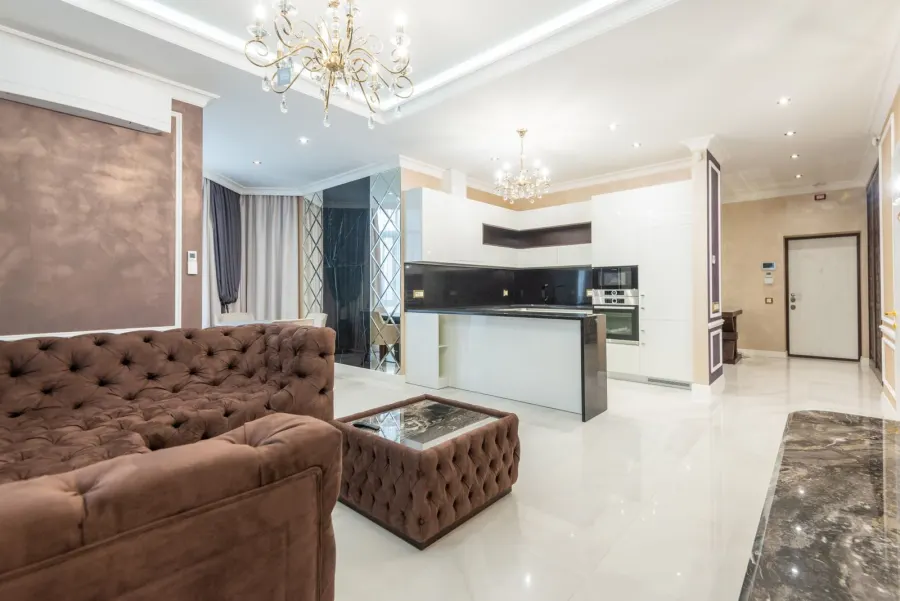
Adding value to a flat is a different job from adding value to a house, and most of the advice written for houses does not apply. You cannot extend, you almost certainly cannot convert the loft, and you do not own the walls that would need to move. What you can do is fix the things buyers reject a flat for. Here is what actually works, and the leasehold reality to check before you spend anything.
What can a leaseholder actually change?
Less than most people assume, and the boundary is set by your lease rather than by planning law. A long lease normally demises the internal space: the plaster, the floor surface, the fittings. The structural walls, the floor slab, the roof and usually the windows stay with the freeholder. That one fact decides most of what follows.
- Cosmetic work is usually free of consent: redecorating, replacing a kitchen or bathroom like for like, and in most cases new flooring.
- Anything structural, or affecting services, drainage, floors or the exterior needs the freeholder's written consent through a licence to alter. Without one you are in breach of covenant, the freeholder can require reinstatement at your cost, and it surfaces when your buyer's solicitor asks for the paperwork.
- The freeholder cannot be unreasonable. Where the lease says consent shall not be unreasonably withheld, section 19 of the Landlord and Tenant Act 1927 protects you. They can still impose conditions and charge their reasonable costs.
- There are no permitted development rights. The General Permitted Development Order applies to dwellinghouses, and its definition excludes flats. Any external alteration, including a rooftop or rear extension, needs planning permission as well as freeholder consent.
Budget for the consent itself. Freeholder legal fees typically run £1,000 to £3,000, their surveyor £800 to £2,500, and a managing agent's administration fee £250 to £500. Allow eight to sixteen weeks, and start the application before you book a contractor.
Sources: Town and Country Planning (General Permitted Development) (England) Order 2015 and the gov.uk permitted development rights for householders technical guidance; Landlord and Tenant Act 1927, section 19; licence to alter fee ranges from London licence to alter surveyors and leasehold solicitors, 2026, indicative and varying widely by block.Why you usually cannot move a wall between flats
Because the wall is not yours, and because of what it is doing. In a converted house or a purpose-built block, the walls separating flats are almost always load bearing or compartment walls, and they sit outside your demise. Removing one transfers load into a structure shared with everyone above and below, so a freeholder will refuse and no sensible engineer would design around it without assessing the whole building. Combining two flats runs into the same wall plus three more obstacles: the leases must be varied or surrendered and regranted, both lenders must agree, and the compartment line carries fire and sound duties under Building Regulations Parts B and E that a simple opening destroys.
Non-load-bearing partitions inside your own flat are often removable, but establish which is which first. A stud wall in a 1930s conversion can easily be carrying the floor above. Get a structural engineer to confirm before anyone lifts a bolster, and see our knock-through guide and structural alterations service.
Kitchens and bathrooms: where the money reliably goes
These two rooms are where a flat is won or lost, because they are the ones a buyer cannot cheaply fix. A London bathroom renovation costs £7,500 to £15,000 and a kitchen £18,000 to £60,000+ by tier.
Be honest about what that buys. There is no published percentage for a new kitchen or bathroom in a flat, and any article quoting one has invented it. What the evidence does support is that a dated kitchen or bathroom is the most common reason a flat sits unsold, and London flats are the weakest part of a soft market in 2026. Treat this as defensive spending: it protects the price and the speed of the sale rather than adding a premium on top. Spec to the block, not to your taste. A £45,000 kitchen in a £450,000 one-bedroom flat will not come back.
Sources: HomeOwners Alliance and MyJobQuote 2026 cost guides for London bathrooms; GS Renovation kitchen cost guide, 2026. We have found no credible research quantifying a percentage uplift for kitchen or bathroom replacement, so we do not quote one.Light, layout and storage: the cheap wins
In a compact flat, perceived space is worth more than almost anything else you can buy.
- Open the galley kitchen into the living room where the partition is non-structural. On a typical 55 m² one-bedroom conversion that costs £3,000 to £6,000 including making good and re-siting sockets, and it is the single change that most alters how the flat shows.
- Light. Glazed internal doors, a mirror opposite the window, pale floors run along the longest wall, and layered lighting instead of one ceiling pendant. See maximising natural light. Replacing external windows is a freeholder matter and usually a planning one, so check before budgeting for it.
- Storage. Built-in wardrobes to the chimney alcoves and a full-height hall cupboard remove the clutter that makes a flat read as small. See our storage ideas.
Does improving the EPC pay?
It is the one flat improvement with a credible published number attached. Rightmove's 2025 analysis of sold data found homes improving their EPC from D to C achieved around 3% more, an average of £11,157, and from E to C around 7%, an average of £26,033. In a flat the levers you control are limited but cheap: roof and party wall insulation are usually not yours, but heating controls, a modern boiler, draught proofing, secondary glazing and low-energy lighting all count. Order a fresh assessment afterwards, because the certificate is what the buyer sees.
Source: Rightmove Greener Homes analysis of sold property data, 2025. This is an association between rating and achieved price across the national dataset, not a guaranteed uplift on an individual flat.The two ceilings on a flat's value: the block and the lease
Every block has a price above which no amount of improvement will take a flat, and it binds tighter than on a street of houses because the flats are near identical. Check HM Land Registry price paid data for sold prices, not asking prices, in your own block over the last eighteen months. The best-finished flat that actually completed is your cap, and within about 10% of it further spending buys a nicer home rather than a bigger number.
The second ceiling is the one flat owners overlook. Lease length moves value more than any renovation. Below 80 years remaining, extending becomes markedly more expensive under the valuation rules still in force in 2026, many lenders will not lend, and the flat is discounted accordingly. The Leasehold and Freehold Reform Act 2024 legislated to remove that penalty, but those valuation provisions have not been commenced and are not expected before 2027 at the earliest. If your lease is heading towards 80 years, spend the money there first.
Sources: HM Land Registry price paid data; HomeOwners Alliance leasehold reform updates, 2026, on the commencement status of the Leasehold and Freehold Reform Act 2024.What we would do, in order
Check the lease term and extend it if it is near 80 years. Read the alterations covenant and price the licence to alter before designing anything. Then spend on the bathroom, then the kitchen, then layout and storage, and treat EPC improvements as a genuine return rather than a green gesture. Leave the structure alone unless an engineer and your freeholder have both signed it off in writing.
GS Renovation renovates flats across London and handles the structural and compliance side properly. If you own a house rather than a flat, which renovations add the most value and cheap ways to add value are the relevant guides. For advice on your flat, contact us or call 07472 424 226.