Key Takeaways
- A householder planning application in England costs £548 from 1 April 2026, up 3.8% (MHCLG planning fees indexation, 2026).
- Councils granted 91% of householder applications in the quarter to March 2026, deciding 93% within 8 weeks or an agreed extension (MHCLG, 2026).
- Many projects need no application at all under Permitted Development, but conservation areas and Article 4 directions take those rights away.
- Approval rates vary by borough: Kensington & Chelsea around 92.5%, Brent around 76%.
- A refused householder scheme has 12 weeks to appeal to the Planning Inspectorate (gov.uk, 2026).
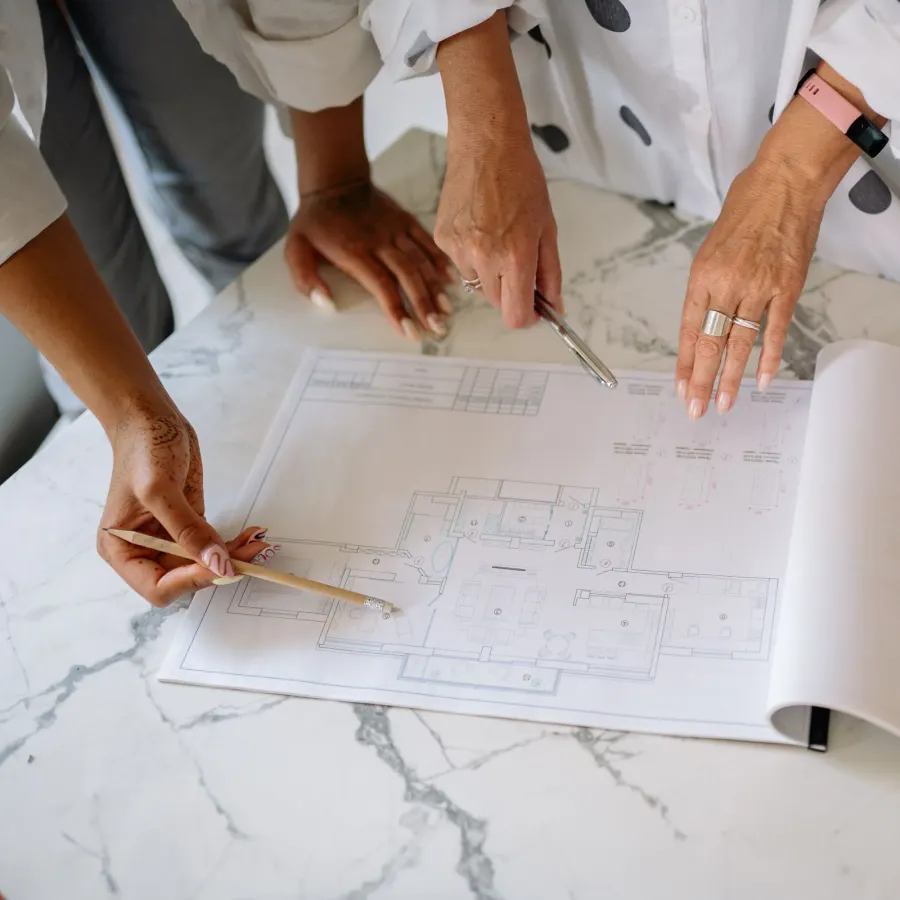
Planning permission sounds daunting, but the odds are good and the process is well defined. This guide covers how to get planning permission in London in 2026: the cost, the timeline, what actually gets refused, and what to do if the answer is no.
Do you even need planning permission?
Start here, because many projects do not need a full application. Single-storey rear extensions within size limits, most rear dormers, outbuildings and internal works often fall under Permitted Development, a national grant of permission that lets you build without applying. You will still need Building Regulations approval, and a party wall award where the work affects a shared wall. Conservation areas, listed buildings, flats and Article 4 directions remove or restrict Permitted Development, so confirm your property's position on the council's planning map rather than assuming.
How much does a planning application cost in 2026?
The council fee for a householder application in England is £548 from 1 April 2026. Fees are now uplifted every April by the previous September's Consumer Prices Index, capped at 10%, so the 2026 figures reflect a 3.8% rise on the 2025 schedule.
| Application type | Fee from 1 April 2026 | Statutory decision period |
|---|---|---|
| Householder (extension or alteration to one house) | £548 | 8 weeks |
| Application covering two or more dwellings | £1,083 | 8 weeks |
| Outbuildings, walls, fences and gates | £272 | 8 weeks |
| Prior approval, larger rear extension or upward extension | £249 | Usually 42 days |
| Lawful development certificate, proposed works | Half the full fee, £274 on a householder scheme | 8 weeks |
| Lawful development certificate, existing works | Same as the full fee, £548 | 8 weeks |
| Discharge or variation of a householder condition | £89 | 8 weeks |
| Non-material amendment to a householder permission | £46 | 28 days |
| Listed building consent | No council fee | 8 weeks |
Budget for drawings on top of the council fee. Most London boroughs also sell pre-application advice, priced locally, which buys a written officer view before you commit. On a finely balanced scheme it is money well spent. See also do I need an architect.
The step-by-step process
- Feasibility check: confirm whether you need permission at all, and read the borough's local plan policies and any conservation area appraisal covering your street.
- Design and drawings: a measured survey, existing and proposed plans and elevations at a stated scale, a site location plan with a red line boundary, and a block plan.
- Supporting documents: a design and access statement where required, plus a heritage statement in conservation areas and for listed buildings.
- Submit via the Planning Portal or the borough's own system, with the fee and ownership certificate.
- Validation: the council checks the submission against its local validation list. Anything missing and the clock does not start.
- Consultation: neighbours are notified and a site notice may go up, usually a 21 day comment period.
- Assessment: a site visit, consultation with the conservation or highways officer where relevant, and often a request for minor amendments.
- Decision: most householder applications are decided by officers under delegated powers rather than by committee.
What actually stops an application being validated?
Missing paperwork, not bad design. The usual culprits are a location plan without a red line, drawings with no scale bar or north arrow, no existing elevations to compare the proposal against, an unsigned ownership certificate and the wrong fee. None is a judgement on your scheme, but each costs a week or more.
What are your chances?
Reassuringly high. Councils in England decided 33,500 householder applications in the quarter to March 2026 and granted 91% of them, according to MHCLG planning statistics. Of those, 93% were decided within 8 weeks or within an agreed extension. Note the wording: extensions of time are routine, so treat 8 weeks as the target rather than the guarantee. Rates vary by borough, with Kensington & Chelsea around 92.5% and Brent closer to 76%.
Source: MHCLG, Planning applications in England: January to March 2026, published 19 June 2026.What gets refused?
Harm to neighbours and harm to character, in that order. The recurring London refusal reasons for householder work are loss of light or outlook to a neighbouring window, overlooking from a new side window or terrace, an extension that is overbearing on a small garden, a roof form that breaks the rhythm of a terrace, and window details that read as modern on a period front elevation. Overdevelopment of the plot and loss of a front garden to hardstanding also appear regularly. Almost all are design problems with design solutions, which is why a redesign usually beats an argument.
What if you are refused?
You have three routes, and appealing is not always the fastest. Amend and resubmit: a similar scheme on the same site within 12 months of a refusal is normally free. Revise the scheme so it falls within Permitted Development and confirm it with a lawful development certificate. Or appeal to the Planning Inspectorate.
A householder appeal must be lodged within 12 weeks of the date on the decision notice. For other planning appeals the limit is 6 months. Most appeals relating to applications submitted on or after 1 April 2026 follow the streamlined written representations procedure, so there is no hearing to attend. Costs can be awarded where the council has behaved unreasonably, and against you if you have.
Source: gov.uk, Planning appeals procedural guide for appeals relating to applications dated on or after 1 April 2026.How to give your application the best chance
- Design in keeping with the property and street, especially in a conservation area.
- Obscure-glaze side windows and set back upper floors before you are asked to.
- Use accurate, scaled drawings and a statement that explains the reasoning, not just the dimensions.
- Talk to the neighbours before the consultation letters land. Objections come far more often from people who found out by post.
- Use a pre-application enquiry for anything unusual, and cite the officer's response in your submission.
What if the work is already built?
You can apply retrospectively, and the time limits now favour the council. Since 25 April 2024 the enforcement period in England is 10 years for all breaches of planning control, operational development and change of use alike, replacing the old four year rule for building work. Where work has become immune, a lawful development certificate for existing use is what proves it to a buyer's solicitor. Deliberate concealment stops the clock entirely.
Source: gov.uk Planning Practice Guidance, Ensuring effective enforcement, reflecting the Levelling-up and Regeneration Act 2023.GS Renovation manages drawings, planning and construction across every London borough, including house extensions and structural alterations. For a free assessment, contact us or call 07472 424 226. See also Permitted Development explained and our extension cost and planning guide.