Key Takeaways
- Chimney breast alcoves are the biggest free win in a period London home: fitted shelving above, cupboards below.
- The under stairs void takes pull-out shoe and coat storage, deep cupboards, a desk nook or a WC at £3,000 to £6,000.
- A built-in banquette seats more people than chairs in a tight kitchen diner and hides storage under the seat.
- Fitted wardrobes use full ceiling height and sloping loft eaves that freestanding furniture cannot reach.
- A London carpenter charges £250 to £350 a day against around £200 nationally (MyJobQuote and Checkatrade, 2026).
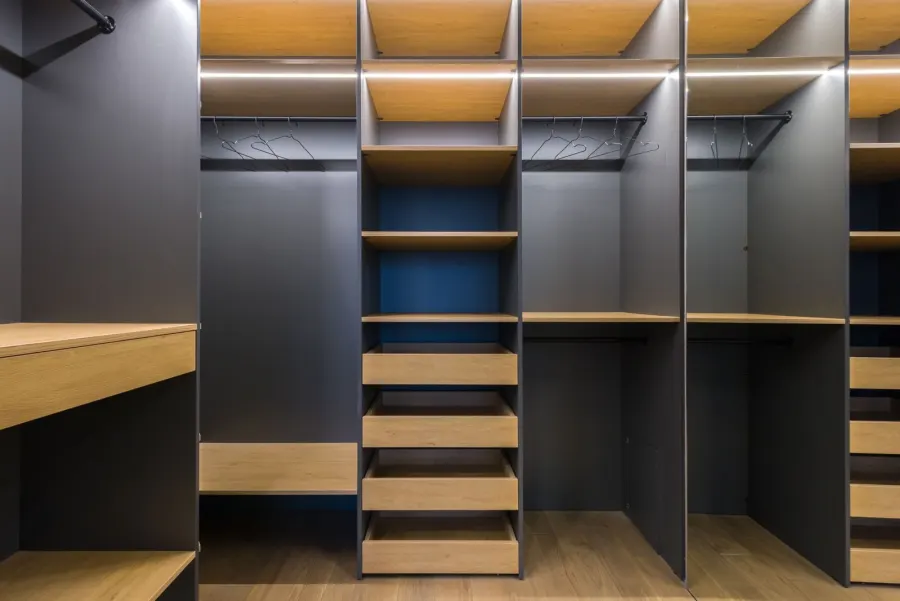
The best storage in a small London home is built into the space that is already going to waste: the alcoves beside a chimney breast, the void under the stairs, the height above door level and the eaves of a loft. Bespoke joinery fits the irregular dimensions of a period house in a way that bought furniture never will. Here are the ideas that make the biggest difference, and what each costs at London rates.
Alcove storage ideas for a chimney breast
Fitted shelving above with cupboards below is the classic, and the single best return on joinery in a Victorian or Edwardian house. The alcoves either side of a chimney breast are typically 300mm to 450mm deep, which is right for books, glassware and everyday clutter without projecting into the room.
The catch is that the two alcoves are almost never the same width, and the walls are rarely square. That is why bought units look wrong and bespoke ones do not: a joiner scribes each carcass to the actual opening. Take the shelving up to picture rail height rather than stopping at chest height and you roughly double the capacity for the same footprint. If you are considering removing the breast instead, read the chimney breast removal guide first, because that is structural work.
Under stairs storage ideas that actually work
The under stairs void is the most wasted space in a London terrace, and what it can become depends entirely on head height at the deep end.
- Pull-out shoe and coat units. Angled drawers on runners that follow the stair pitch, reaching the shallow end you can never otherwise use.
- A cloakroom WC. The classic conversion, and a compact one fits from around 0.8m by 1.4m. Budget £3,000 to £6,000 in London, driven mostly by the distance to the soil stack. See adding a downstairs toilet.
- A desk nook. Works where the stair runs against a wall with a window nearby. See home office conversions.
- Deep cupboards for the vacuum, buggy, tools and suitcases, which is often the most honest use of it.
Banquette seating for a small kitchen diner
A built-in banquette seats more people in less space than dining chairs, because nobody needs clearance to pull a chair back. In a compact kitchen diner or the tail of a side return extension, running the seat along one or two walls with storage underneath frees a metre of circulation. Hinged lids are cheaper; drawers are far more usable day to day.
Fitted wardrobes for a small London bedroom
Fitted wardrobes work where freestanding ones do not, because they use the full height to the ceiling and follow awkward geometry: the recess beside a chimney breast, a sloping loft ceiling where the eaves are only a metre high, or the boxed-in soil stack in a rear bedroom. In a narrow room, a shallow run of full-height wardrobes across the end wall takes less floor area than one freestanding double and squares the room off visually.
What does bespoke storage cost in London?
Labour is the largest part of it, and a London carpenter charges £250 to £350 a day against around £200 nationally. The ranges below are for supplied and fitted joinery, painted and ready to use.
| Item | Typical London cost | Notes |
|---|---|---|
| Carpenter or joiner day rate | £250 to £350 | Around £200 nationally |
| Fitted alcove units, a matching pair | £1,500 to £3,500 (indicative) | Two to three days on site plus materials |
| Under stairs pull-out storage | £900 to £2,500 (indicative) | Runners and angled carcasses drive the cost |
| Under stairs cloakroom WC | £3,000 to £6,000 | Distance to the soil stack is the main factor |
| Built-in banquette with storage under | £1,200 to £2,800 (indicative) | Drawers cost more than lift-up lids |
| Fitted wardrobe wall, double bedroom | £2,000 to £5,000 (indicative) | Sloping eaves and internal fit-out add to it |
| Cabinet carcasses if buying in | £65 to £400 per unit | Chipboard £65 to £300, MDF £70 to £400, solid wood more |
Storage in a period conversion or flat
Flats and conversions have the same wasted corners but tighter rules. Joinery fixed to a wall is normally fine, but anything structural, including removing a chimney breast or altering a partition, needs freeholder consent under the lease and confirmation of whether the wall is load bearing. Check the lease before you brief a joiner, because consent takes weeks. See adding value to a London flat.
Elsewhere the principle is the same: use the height. A narrow hallway takes a shallow shoe cabinet with shelving above head height, and a tall larder unit clears a small kitchen worktop faster than any other single change.
GS Renovation designs and fits bespoke joinery as part of home renovations across London. To design storage into your project, contact us or call 07472 424 226.