Key Takeaways
- Verify the company on Companies House, ask for the public liability certificate, and check the trade registers for gas and electrical work.
- Get three itemised quotes on identical scope, and ask each builder how many days they have allowed.
- London labour runs 10 to 25% above the rest of the UK, and 25 to 40% on a whole-house project (MyJobQuote, 2026).
- Never pay in full upfront. Use staged payments against completed work and hold a 5% retention until snagging is done.
- Paying a deposit by credit card gives you Section 75 protection on anything between £100 and £30,000.
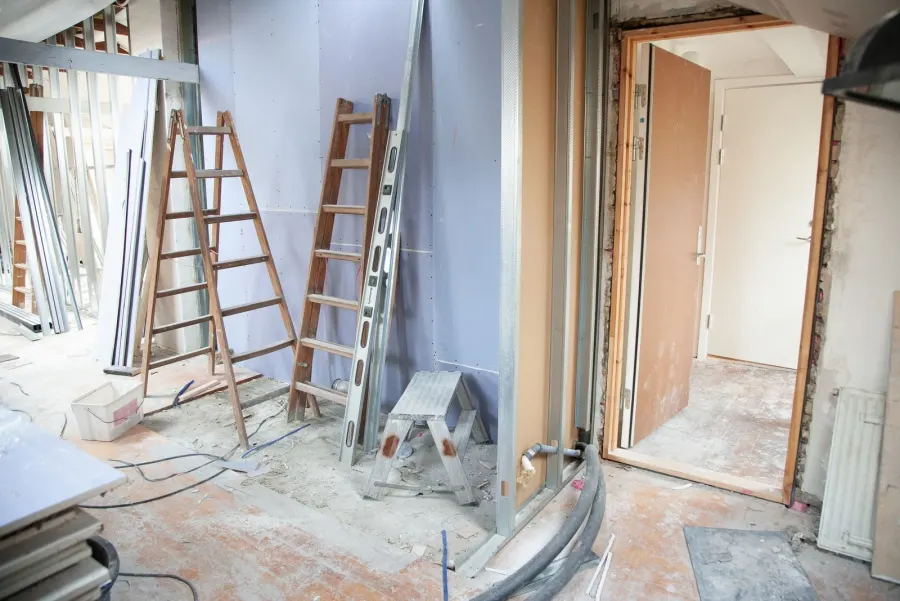
To find a good builder in London, check the company exists and is insured, see recent comparable work in person, take up references you actually telephone, and get three itemised quotes for the same scope. Your builder is the single biggest factor in whether a renovation goes well. Here is how to separate the good ones from the rest.
How do you check a builder is legitimate?
By verifying them against public records rather than taking their word for it. All of this takes about twenty minutes and it is the most valuable twenty minutes of the whole project.
- Companies House. Check the company is active and confirm the person quoting you is a director. A company incorporated last month for a £90,000 job is worth a question.
- Public liability insurance. Ask for the certificate itself. Check the insurer, the sum insured, the expiry date, and that it is in the same name as the company quoting you.
- Gas Safe Register. Legally required for gas work, and you can check the engineer's registration number on the register.
- Electrical competence. Part P work should be done by an electrician registered with NICEIC, NAPIT or ELECSA, who issues a certificate.
- Trade bodies. Federation of Master Builders membership involves an independent inspection, and TrustMark is the government endorsed scheme. Neither guarantees anything, but both mean somebody has checked.
- Recent comparable work. Visit a finished project of similar type and value, and telephone two past clients. In a period house, ask whether they have done that job in that kind of house.
What do builders charge in London?
London trades charge roughly 10 to 25% more than the rest of the UK on labour, and a whole-house project runs 25 to 40% above national figures once restricted access, parking and borough permits are counted. Knowing the going rate is how you spot a quote that is too good to be true.
| Trade | London day rate | Rest of UK |
|---|---|---|
| Carpenter or joiner | £250 to £350 | Around £200 |
| Decorator, one person | £200 to £380 | £150 to £280 |
| Decorating team of two | £400 to £650 | Lower outside the South East |
| Kitchen fitter | £300 to £450 | £200 to £300 |
| Bathroom and wet trades | £220 to £350 | Up to £480 for specialists |
Most contractors price a job rather than a day, but the day rate is the honest test of a quote. Divide the labour element by the rate above and you get the days actually allowed. If that number looks impossible for the work, the quote is wrong.
What should a builder's quote include?
A breakdown by element, not a round number. Get three itemised quotes on identical scope so you are comparing like with like, and check each one covers the following.
- Labour and materials separated, element by element.
- Whether VAT at 20% is inside or outside the figure. On a £60,000 job that is a £12,000 difference. See VAT on renovations.
- What is provisional and what is fixed. Provisional sums are estimates that will change.
- Skips, scaffold, parking suspensions and waste removal, which are real London costs.
- Who applies for building control, who pays the fees, and who serves any party wall notices.
- Making good: plastering, decoration and floor finishes after the main work.
- A programme in weeks, with the number of days allowed on site.
Be cautious of the quote that is dramatically cheaper. It usually means missing items, thinner materials or a shorter allowance of days, and the difference reappears later as extras. Remember to add fees and a 10 to 15% contingency on top of whichever you accept.
What are the warning signs of a cowboy builder?
The signs below are the ones that most reliably precede a problem. Any one of them is a reason to pause. Two or more and you should walk away.
- Demands for a large cash payment upfront, or a discount for paying cash.
- No written contract, or reluctance to put anything in writing.
- No verifiable company, no fixed address, and a mobile number only.
- Pressure to decide today, or a price that expires this week.
- A quote far below the others with no explanation of what is different.
- Unable or unwilling to show recent comparable work or give references.
- Suggesting you skip building control, or that a certificate is not needed.
- Cold calling at the door, particularly about roofs, drives or damp.
What should be in the contract, and how should you pay?
Scope, price, programme, payment schedule and how variations are handled, all in writing and signed by both sides. For larger jobs a JCT Homeowner contract gives a recognised framework. See renovation contracts explained.
On payment, the principle is simple: money follows completed work. A modest deposit for materials is normal. Paying the whole sum, or a large proportion of it, before work starts is not.
- Agree staged payments tied to milestones you can see, such as structure complete or first fix complete.
- Hold a retention of around 5% until the snagging list is cleared.
- Pay deposits by credit card where you can. Section 75 of the Consumer Credit Act 1974 makes the card provider jointly liable on purchases between £100 and £30,000.
- Price and agree every variation in writing before the work is done. This is the biggest single cause of disputes.
- Keep the paper trail. Under the Consumer Rights Act 2015 work must be carried out with reasonable care and skill, and your records are what prove it was not.
Confirm the builder manages building control and hands you the certificates at the end. Those are what a buyer's solicitor will ask for. See also renovation mistakes to avoid.
GS Renovation is a registered company with over 30 years of hands-on experience across all 32 boroughs, fully insured, with references, itemised quotes and certificates as standard. For home renovation in London or structural alterations, contact us or call 07472 424 226.