Key Takeaways
- Replacing a single lintel typically runs £650 to £1,000, with the full range about £500 to £2,500 depending on span and access.
- The tell is a crack that starts at the top corner of a window or door and steps upward through the mortar.
- A lintel carries the wall above an opening. When it fails the load has nowhere to go, so it never improves on its own.
- Cracking above several openings at once is usually not the lintels. Look at wall ties or ground movement instead.
- This is notifiable structural work. A structural engineer sizes the replacement and building control signs it off.
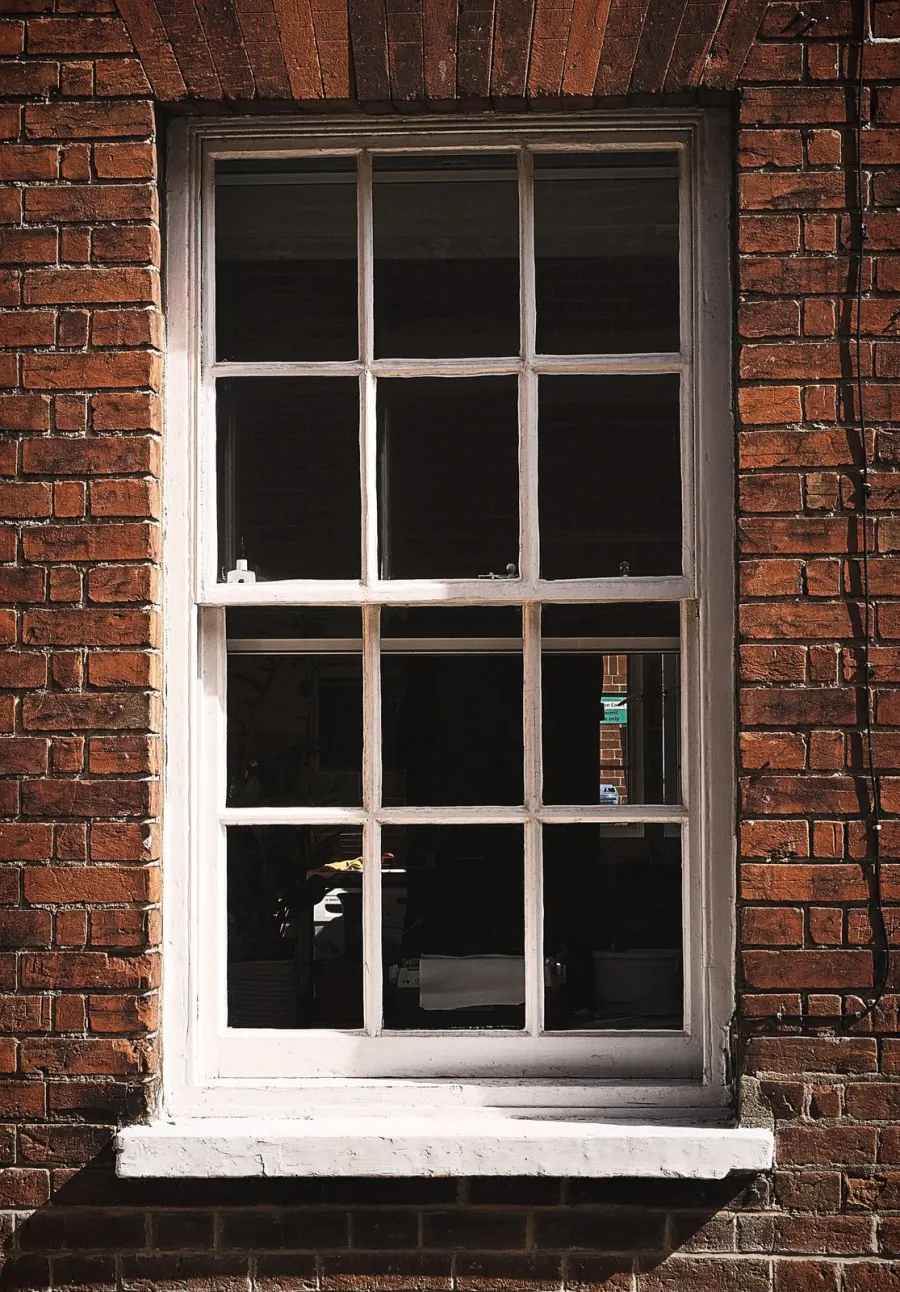
A lintel is the beam over a window or door that carries the wall above it. When one fails you get a crack in a very particular place, and the useful question is not what it costs to fix but whether the lintel is actually the problem.
What does a failed lintel look like?
A crack that begins at the top corner of an opening and steps up and outward through the mortar joints. That diagonal, starting exactly at the corner, is the signature. You may also see the brickwork directly above the window sagging very slightly, a window that has begun to stick, or a horizontal crack running along the line of the lintel itself.
The reason the crack lands there is simple. The wall above an opening wants to arch, and the load travels down into the masonry either side. A lintel holds that load while it happens. Once the lintel deflects, corrodes or was never adequate, the arch cannot form and the brickwork moves at its weakest point, which is the corner.
Age narrows it down. Pre-1900 London stock usually has a shallow brick arch or a timber lintel hidden behind the render. Interwar and post-war houses normally have concrete. From the 1970s onward you are most often looking at galvanised steel, and where that steel was bedded without adequate cover it rusts, expands and lifts the courses above it.
Is it serious, or can it wait?
A failed lintel is not an emergency in the way a bulging wall is, but it does not stabilise on its own, and the cost of waiting is that the repair widens. A hairline step crack over one window is a job for the next dry spell. Brickwork you can see has dropped, a lintel visibly bowing, or daylight in the joint is a call this week.
The genuinely useful test is how many openings are affected. One window is very likely the lintel. Three windows up one elevation, or cracking that continues below the openings as well as above them, is a different problem wearing the same clothes, and replacing lintels will not fix it.
- One opening, crack from the top corner: most likely the lintel
- Several openings on one elevation, horizontal cracks at regular heights: look at wall ties
- Cracks wider at the top, doors and windows out of square, cracks continuing to ground level: investigate movement
- Crack under a window rather than above it: usually not the lintel at all
If the pattern points away from the lintel, read our guide to cracks in walls and when to worry before spending anything, and the London subsidence guide if the cracks are tapered and reach the ground.
What does lintel replacement cost?
Most single lintel replacements land between £650 and £1,000. The wider range runs about £500 to £2,500, and what moves you along it is span, access and what has to be propped while the work happens.
| Job | What it covers | Typical cost |
|---|---|---|
| Standard door or window lintel | Single opening, ground floor, straightforward access | £650 to £1,000 |
| Terrace or semi, standard job | Shared walls, less load, easy access | £500 to £900 |
| Window around 6ft wide | Per window, depending on access and scaffolding | £700 to £1,200 |
| Full range across all cases | Short span to wide opening, upper floor, difficult access | £500 to £2,500 |
| Concrete lintel, material only | The component for a small span | £50 to £150 |
| Bricklayer day rate | Labour, varies by region | £200 to £400 per day |
Two things are commonly missed from a cheap quote. The first is making good: plaster inside, pointing outside, and redecoration. The second is scaffolding, which is unavoidable at first floor and adds several hundred pounds. Ask whether both are in the price before comparing two numbers.
How the replacement is actually done
Carefully and in stages, because for a short period the wall above the opening is being held by props rather than by anything permanent.
- The opening is inspected and the existing lintel type identified, which often means removing plaster or a section of render first
- A structural engineer sizes the replacement against the span and the load above it. We appoint the engineer and build to that design; we do not produce calculations ourselves
- Acrow props and strongboys pick up the masonry above the opening, spread onto sole plates so the props do not punch through the floor
- The failed lintel is cut out in sections and the bearings at each end are cleaned back to sound brickwork
- The new lintel is set on a bed of mortar with the correct end bearing, usually at least 150mm each side, and a cavity tray with weep holes where it bridges a cavity
- The masonry above is pinned up tight with slate or dry pack so the wall is carried without settling further
- Building control inspects the bearings before anything is covered, then plaster, pointing and decoration follow
The whole thing is usually one to two days per opening on site, plus drying time before decoration. Where the lintel sits in a wall shared with a neighbour, the Party Wall etc. Act 1996 may apply and notice is served by you as the building owner rather than by us. Our Party Wall Act guide sets out the notice periods.
Do you need permission to replace a lintel?
Not planning permission, in almost every case, because nothing about the appearance of the building changes. Building regulations are a different matter: replacing a structural lintel is notifiable work and building control inspects it. A completion certificate is what a buyer's solicitor will ask for later, and it costs far less to obtain now than to explain away at sale.
Two exceptions are worth knowing. On a listed building, altering a brick arch or a stone head is consentable work in its own right. In a conservation area, changing the visible detail above a window can also need consent even though the structure behind it does not. Check the designation before ordering anything. Our building regulations guide explains the inspection stages.