Key Takeaways
- A full house renovation takes 3 to 6 months on site, and 5 to 10 months from first drawing to handover.
- A kitchen takes 3 to 5 weeks, a bathroom 10 to 15 working days.
- Extensions take 10 to 16 weeks on site, loft conversions 6 to 10 weeks.
- Design, consents and lead times add 6 to 16 weeks before anyone arrives, and that is the part people leave out.
- A party structure notice is two months and a householder planning decision around 8 weeks (gov.uk and MHCLG, 2026). Both gate the start date.
- Staying in the house through the works typically adds 30 to 50% to the programme on services work.
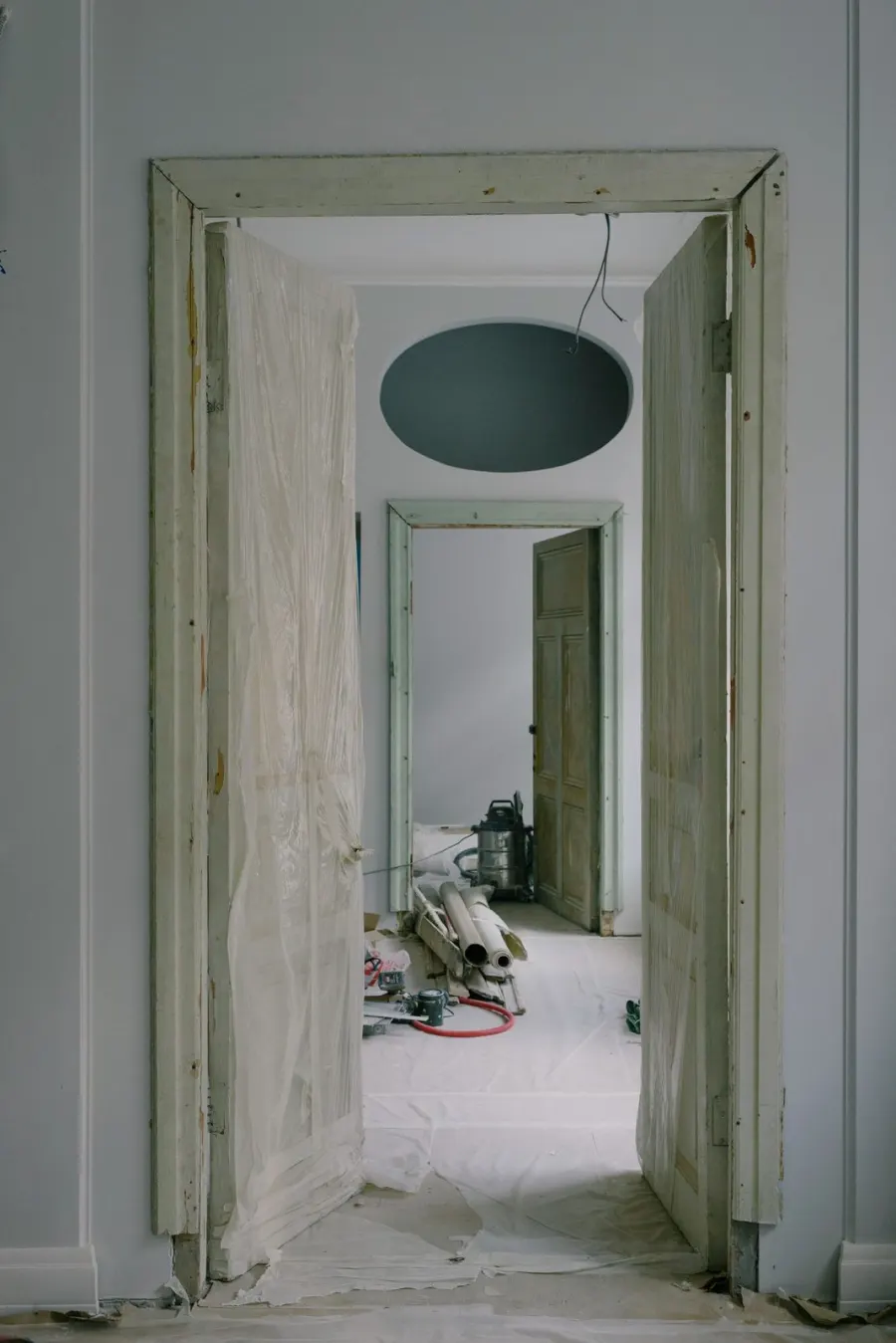
One of the first questions homeowners ask is how long it will all take, and the honest answer is that the build is rarely the long part. Design, consents and lead times routinely take as long again. Here are realistic durations for London projects in 2026, what has to happen before site, and what actually causes the overruns.
How long does each type of renovation take?
A full house renovation takes 3 to 6 months on site, a single-storey extension 10 to 16 weeks, a loft conversion 6 to 10 weeks, a kitchen 3 to 5 weeks and a bathroom 10 to 15 working days. The column that surprises people is the first one: the lead-in before anyone turns up.
| Project | Design and consents, before site | Time on site | Realistic total |
|---|---|---|---|
| Bathroom refurbishment | 2 to 4 weeks for design and orders | 10 to 15 working days | 6 to 10 weeks |
| Kitchen renovation | 4 to 8 weeks, longer for bespoke | 3 to 5 weeks | 2 to 3 months |
| Kitchen with a structural opening | 6 to 10 weeks, party wall and building control | 6 to 8 weeks | 4 to 5 months |
| Loft conversion | 8 to 16 weeks | 6 to 10 weeks | 4 to 7 months |
| Single-storey rear extension | 12 to 20 weeks | 10 to 16 weeks | 6 to 9 months |
| Full house renovation | 6 to 16 weeks | 3 to 6 months | 5 to 10 months |
Two things move these figures more than anything else. A structural opening adds a party wall notice period, an engineer, a building control application and steel fabrication, which is why the same kitchen goes from 3 weeks to 8. And a mansard, a trussed roof or a pre-1919 property that has never been opened up all sit at the longer end of every band.
What has to happen before work starts?
Between six and sixteen weeks of design, consents and ordering, running roughly in this order. None of it is optional and none of it can be shortened by paying more.
- Survey and design, 2 to 4 weeks. A measured survey, then existing and proposed drawings.
- Planning, around 8 weeks from validation. A householder application costs £548 from 1 April 2026. Councils in England decided 93% of householder applications within 8 weeks or an agreed extension in the quarter to March 2026, so treat 8 weeks as the target rather than the guarantee. Many projects need no application at all under permitted development.
- Structural calculations and building control, 1 to 3 weeks. A full plans application can take up to 8 weeks, though it is usually faster. See Building Regulations explained.
- Party wall notices, one or two months. Two months for a party structure notice, one month for a line of junction or adjacent excavation notice, plus 14 days for the neighbour to reply and a few weeks more if they dissent. This is the single most commonly underestimated item in a London programme. See the Party Wall Act explained.
- Builder availability. Good contractors are booked weeks or months ahead. A start date is only a start date once it is in a contract.
Which materials have the longest lead times?
Windows, bespoke joinery and stone, all of which are made to order rather than picked off a shelf. These are the items that stop a site, because a site with nothing left to do still costs money.
| Item | Typical lead time | Order it by |
|---|---|---|
| Standard kitchen units | 4 to 8 weeks | Start of first fix |
| Bespoke or handmade cabinetry | 10 to 16 weeks | Before strip out |
| Stone or quartz worktop | 1 to 2 weeks after templating | Templated once units are fitted and level |
| Made-to-measure timber sash windows | 8 to 12 weeks from survey | Before structural work starts |
| Aluminium or steel-look glazed doors | 8 to 12 weeks | Before the opening is formed |
| Fabricated structural steel | 1 to 3 weeks | On approval of the calculations |
| Sanitaryware and brassware | 2 to 6 weeks | Before first fix, so pipework matches |
| Engineered timber flooring | 2 to 4 weeks, plus acclimatisation | Before plastering |
Why does a London renovation take longer?
Access, consents and the age of the housing stock, in that order. The same specification in a suburban detached house genuinely does run faster than in a Victorian terrace.
- Everything goes through the front door. A terraced house with no side access means every tonne of waste out and every pallet of materials in is carried by hand, which adds days rather than hours across a whole-house job.
- Borough permissions run on their own clocks. A skip needs a highway permit, pavement scaffold a licence, and a parking bay suspension is charged per bay per day and has to be applied for in advance.
- Working hours are restricted. Most London boroughs allow noisy work roughly 08:00 to 18:00 on weekdays and 08:00 to 13:00 on Saturdays, with nothing on Sundays or bank holidays. A site with a hard 18:00 stop cannot make up a lost afternoon in the evening.
- Attached properties mean party wall notices. Terraces and semis nearly always trigger the Act on structural work.
- Pre-1919 stock hides more. Lath and plaster, lime mortar, notched joists and drains that are not where the plan says all surface in week one, which is exactly what the contingency is for.
What causes delays, and how do you avoid them?
Late decisions and late orders cause more lost weeks than anything on site does. A builder can absorb a surprise in the fabric. Nobody can absorb a ten week lead time discovered in week nine.
- Finalise the design and every material choice before work starts. Tiles, sanitaryware, brassware, flooring, ironmongery and paint colours all belong in the specification, not in a conversation on site.
- Order long lead-time items early, using the table above.
- Keep a contingency of 10 to 15%, 20% in a pre-1919 house. A surprise with money behind it costs days. A surprise without costs weeks while it is argued about.
- Follow the order of works. Rework is the most expensive kind of delay because you pay for the same work twice.
- Use one coordinated team so the plasterer arrives the day after first fix passes rather than the following week.
- Decide whether you are staying. Living in the house through services work typically adds 30 to 50% to that part of the programme. See living in your home during a renovation.
Then hold the last fortnight properly: snagging, certificates and handover are a stage in their own right, not something that happens on the final afternoon. For a realistic, dated programme for your project, whether that is a whole-house renovation or an extension, contact us or call 07472 424 226.