Key Takeaways
- Laminate materials run £6 to £35 per m² by thickness and AC rating; engineered wood £25 to £100+ (MyJobQuote and Checkatrade, 2026).
- The real difference is the top: laminate is a printed image, engineered wood has a 3mm to 6mm real hardwood face that can be sanded.
- Budget laminate lasts 8 to 12 years; engineered wood lasts 20 to 30 and longer if refinished.
- Over underfloor heating, floor surface temperature must never exceed 27°C, whichever you choose.
- In a London flat, your lease and Part E decide the answer before cost does.
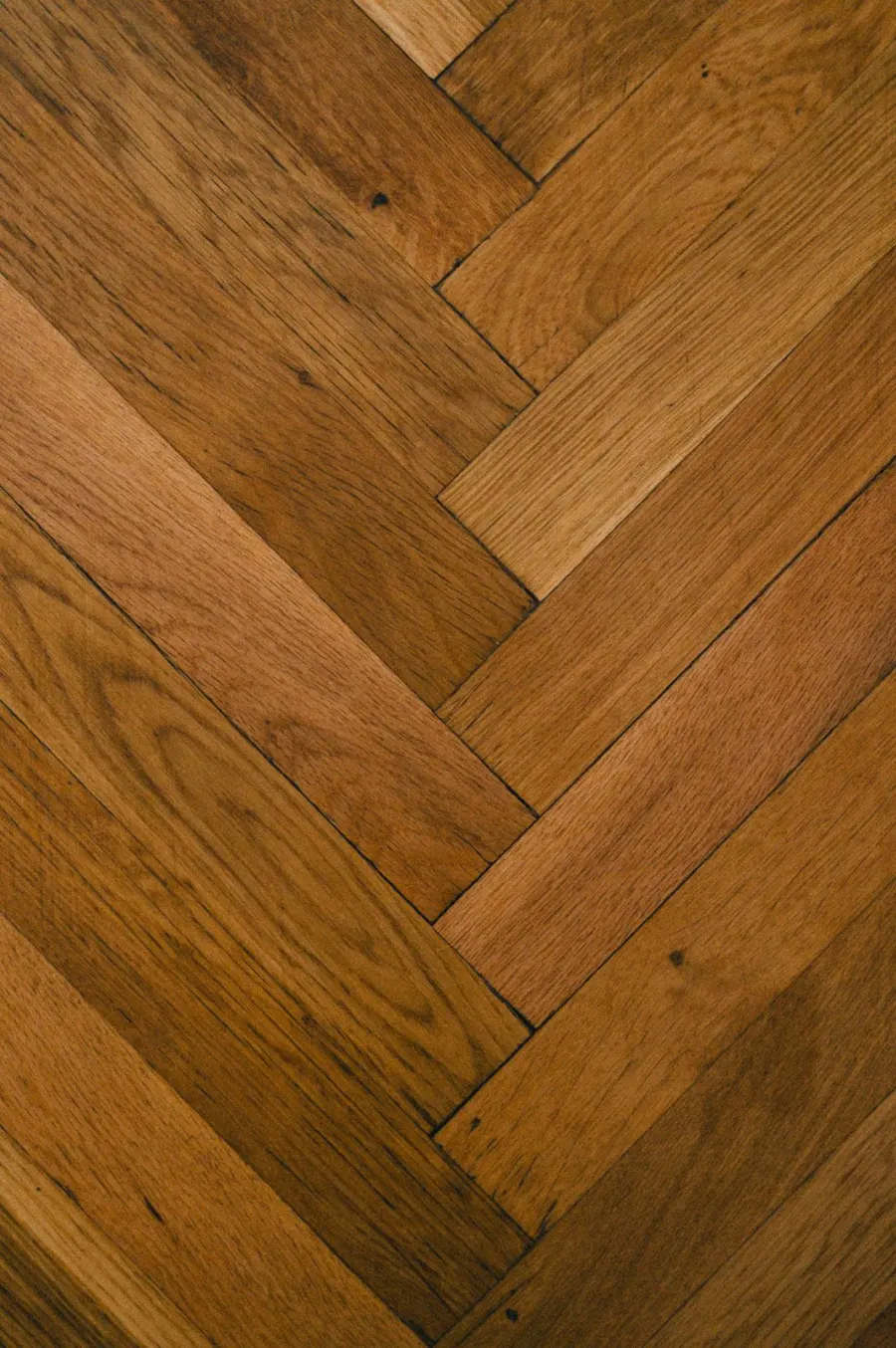
Engineered wood and laminate look almost identical in a showroom and behave nothing alike after five years of a London household. The decision comes down to the top surface, how long you intend to keep the floor, and, if you are in a flat, what your lease allows.
The three compared
Laminate is a printed decor layer over a high density fibreboard core; engineered wood is a real hardwood face bonded to a plywood core; solid wood is one piece of timber throughout.
| Factor | Laminate | Engineered wood |
|---|---|---|
| Materials per m² | £6 to £35 | £25 to £100+ |
| Fitting per m² | £10 to £30 | £15 to £25 floating, more glued |
| Top surface | Printed image under a wear layer | 3mm to 6mm real hardwood |
| Can it be sanded? | Never | Once or twice at 3mm, two or three times at 4mm, up to four or five at 6mm |
| Typical lifespan | 8 to 12 years budget, 20 to 30 premium | 20 to 30 years, longer if refinished |
| Underfloor heating | Generally fine, check the tog rating | Best wood option, keep the board under 18mm |
Laminate
Laminate is graded by its AC rating under EN 13329, and that grade is the number worth checking. AC1 and AC2 are for bedrooms and studies, AC3 is the sensible minimum for a hallway or living room, and AC4 and AC5 are commercial grades. Budget 6mm to 7mm boards at AC2 or AC3 cost £6 to £12 per m², mid-range 8mm to 10mm AC4 boards £14 to £20, and 10mm to 12mm AC5 £22 to £35.
One caveat that catches people out: the AC scale measures abrasion, impact and wear. It says nothing about water. Moisture gets into laminate through the joins, so "water resistant" claims are about the board edges and core, not the AC number.
Source: MyJobQuote and EPLF, 2026.Engineered wood
What you are buying is the wear layer, the real hardwood face. Under 2mm it should never be sanded, because the risk of cutting through is too high. At 3mm it will take one or two sandings, at 4mm two or three, and at 6mm up to four or five, because each professional sand takes off roughly a millimetre. Total board thickness is usually 14mm to 20mm. A 2mm veneer at £30 per m² and a 6mm veneer at £80 look the same on day one and are not the same purchase.
Solid wood
Solid wood can be sanded many times and suits period homes, but it expands and contracts with humidity, which makes it the worst of the three over underfloor heating and in kitchens. In practice engineered wood now does most of what solid wood was chosen for, with far less movement.
What fitting actually costs in London
Budget for the preparation, not just the boards. Fitting runs £10 to £30 per m² for laminate and £15 to £25 for floating engineered wood, rising for glue-down and considerably more for herringbone or chevron. Underlay adds £1 to £7 per m² for laminate and £3 to £8 for engineered, and trimming doors costs around £30 each.
The line that ruins budgets is levelling. National guides put subfloor levelling at roughly £15 per m², but London specialists quote £35 to £45 per m² for latex self-levelling compound and £30 to £40 for a plywood overlay, which is what an uneven Victorian floor usually needs. On a 20m² room that gap is £700. See our flooring options guide for how the other materials compare.
Source: MyJobQuote, PriceYourJob and Timberzone, 2025 to 2026.Which works better over underfloor heating?
Engineered wood, provided it is specified for it. The governing rule is that the floor surface temperature must never exceed 27°C at any point, and manufacturers are clear that room thermostat settings are not floor temperature settings. Exceed it even briefly and the hardwood face shrinks, splits along the plank centre and eventually curls at the edges.
Keep engineered boards at or under 18mm for good heat transfer, and keep the combined thermal resistance of floor plus underlay low, with roughly 0.15 m²K/W commonly quoted as the ceiling. Laminate is usually compatible too and has a lower tog. Neither should be laid under rugs over a heated floor. See our underfloor heating cost guide.
Source: Ted Todd underfloor heating installation guide and Underfloor Heating Store, 2025 to 2026.If you live in a London flat, read this first
Check the lease before you choose anything. Many London leases require carpet to be retained in living areas, or landlord consent before hard flooring goes down. On top of that, Approved Document E sets an impact sound limit of 62 dB for floors in purpose-built flats and 64 dB for flats formed by conversion.
Acoustic underlay on its own does not deliver that. Performance comes from the whole build-up, the substrate, underlay, covering and the ceiling below, and rigid skirtings alone can leak enough sound to undo the underlay. Budget for the assembly, not a roll of foam.
Source: Approved Document E, 2003 edition with amendments to 2015.How to choose
Fit engineered wood if you own the home and intend to stay, if you have underfloor heating, or if you want a floor you can sand rather than replace. Pay for a 4mm or thicker wear layer, because a 2mm veneer is a laminate with a wood price. Fit laminate for rentals, for a flip, for a family hallway that will be destroyed either way, or wherever you would genuinely rather replace the floor in ten years than refinish it. Choose AC3 as the minimum and do not put either into a bathroom. Solid wood is now a specialist choice for period rooms without underfloor heating.
GS Renovation supplies and fits flooring as part of full renovations across London, including home renovation in London. For a free quote, contact us or call 07472 424 226.