Key Takeaways
- Converting an existing cellar costs £1,200 to £2,250 per m²; a new basement dig costs £3,000 to £5,000 per m² (MyJobQuote / Architecture for London, 2026).
- Mid-range complete London conversions sit around £2,000 to £3,000 per m².
- A full new basement under a London terrace can total £150,000 to £400,000+.
- Underpinning runs £1,500 to £2,600 per m² and is usually the largest single line in the budget (Checkatrade, 2026).
- Basements almost always trigger the Party Wall Act and need structural engineering and Building Control.
- Waterproofing is the detail that decides whether the room works. Get it wrong and it is ruinous to put right.
- Allow 9 to 18 months end to end, of which 12 to 30 weeks is on site for an excavation (MyJobQuote, 2026).
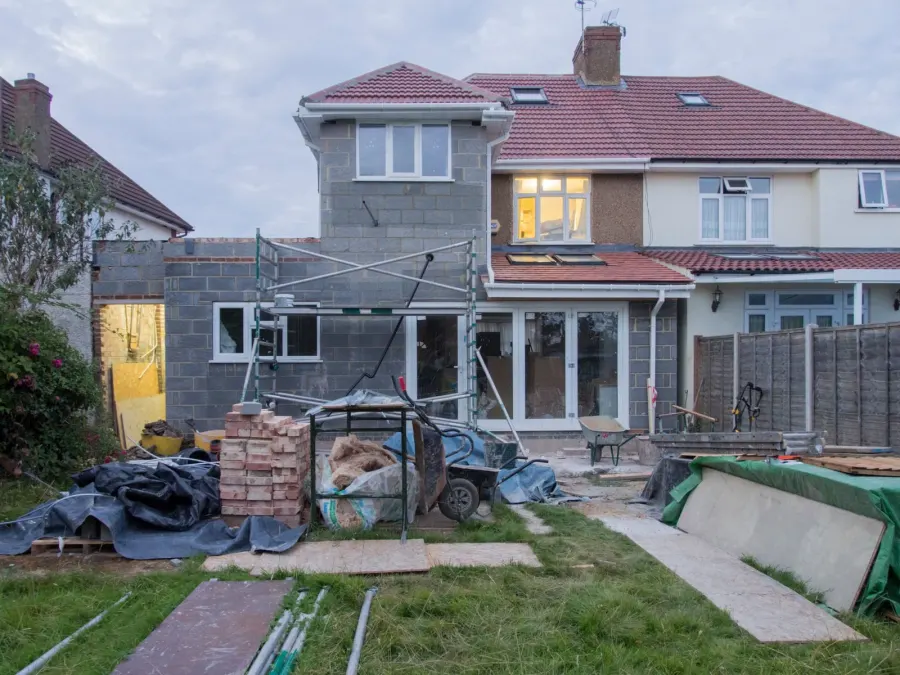
In central London, where you cannot always build out or up, digging down can add a whole new floor. But basements are the most technically demanding and expensive way to add space, and the one where the difference between a good and a bad job shows up years later. Here is what they cost in 2026 and what the process involves.
How much does a basement conversion cost in London?
Costs depend heavily on whether you are converting an existing cellar or excavating a new basement. Converting an existing below-ground space costs £1,200 to £2,250 per m², while a new basement dig costs £3,000 to £5,000 per m², according to MyJobQuote and Architecture for London 2026 figures. Mid-range complete conversions in London sit around £2,000 to £3,000 per m², and London runs 20 to 25% above the rest of the UK.
| Project type | Cost per m² | Typical London total |
|---|---|---|
| Existing cellar conversion | £1,200 to £2,250 | £30,000 to £70,000 |
| Cellar conversion with floor lowering | £2,300 to £3,000 | £70,000 to £150,000 |
| New basement excavation | £3,000 to £5,000 | £150,000 to £400,000+ |
| Architect-led London basement, all in | £6,000 to £8,000 | £250,000+ |
The last row is worth explaining, because it is where quotes stop matching each other. Trade cost guides quote the build rate. Architecture for London's all-in London figure of £6,000 to £8,000 per m² includes professional fees, planning, VAT and fit-out. Neither is wrong. Check which one you are being given, then look at the elements below, which are the ones that move a basement budget.
| Element | Typical cost | Notes |
|---|---|---|
| Underpinning | £1,500 to £2,600 per m² | Mass concrete at the lower end, piling at the top |
| Tanking a cellar or basement | Around £125 per m² | Barrier system applied to the structure |
| Cavity drain membrane with sump and pump | £80 to £150 per m² | Indicative. The usual London choice |
| Lightwell or separate external access | £5,500 to £10,000 | Almost always needs planning permission |
| Party wall surveyor, basement | £1,800 to £2,700 | Per adjoining owner, single agreed surveyor |
Cellar conversion or new excavation: which do you actually have?
Measure the head height first, because it decides which of three jobs you are buying. If an existing cellar already has around 2.4m from floor to underside of the joists, you are converting: damp proofing, waterproofing, drainage, insulation, lighting and a staircase, with no structural risk to the house. That is the £1,200 to £2,250 per m² job.
Below roughly 2.1m you are into floor lowering, which means underpinning the existing walls so the ground can be taken out beneath them, then casting a new slab. A new dig under a house with no cellar at all, or out under the garden, is the full job: temporary support, sequential underpinning, excavation, a reinforced concrete box and a new opening in the ground floor. Note that vaults extending under the pavement belong to the highway authority, so they need separate consent and cannot be assumed to be yours.
What does the structural work actually involve?
Two elements make or break a basement: underpinning and waterproofing. Underpinning extends the existing foundations downwards in short sections, traditionally in a hit and miss sequence of roughly 1m bays so the wall is never unsupported over a long run. Each bay is excavated, concreted and dry packed up tight to the underside of the existing footing before its neighbour is opened. The sequence is set by the structural engineer, not the site, and monitoring is normal on a London terrace.
Waterproofing is designed to BS 8102 and comes in three types. Type A is a barrier applied to the structure, tanking in the usual sense. Type B is structurally integral, a watertight reinforced concrete box. Type C is a cavity drain membrane that accepts water will get in and manages it to a sump and pump. For habitable space in London clay, engineers normally combine two of them, and a Type C system needs twin pumps, a battery backup and a maintainable access point, plus a service contract. Below-ground drainage cannot fall to the sewer by gravity either, so waste from a basement bathroom is pumped.
Fire and escape are checked at the same time. A habitable basement usually needs a protected stair or an external escape route, and a basement bedroom needs its own means of escape.
Do you need planning permission for a basement?
Converting an existing cellar with no external changes often needs no planning permission, but almost anything else in London does. A lightwell, an external stair, a new front garden opening or a rooflight in the pavement is all visible development. New excavation under the house or garden is judged against borough basement policy, and inner London boroughs run the tightest regimes in the country.
In Kensington & Chelsea, Policy CD11 normally allows a basement to go no more than one storey down and under no more than 50% of the garden, excavation under a listed building is not permitted, and a borough-wide Article 4 direction in force since 2016 means there is no permitted development route at all. Westminster similarly limits basements to a single storey and requires structural, hydrological and construction management evidence. Expect to submit a basement impact assessment, a structural method statement and a construction traffic management plan.
Building Regulations approval is always required. Check also whether the Community Infrastructure Levy applies and whether you need a Thames Water build over agreement for a nearby public sewer. Our guides to basement planning permission, Article 4 directions and getting planning permission in London cover the routes.
Party wall: what a basement triggers
Almost always, and earlier than people expect. Three sections of the Party Wall etc. Act 1996 can bite at once: section 2 where you underpin or cut into the party wall itself, section 6(1) where you excavate within 3m of a neighbour's structure and deeper than their foundations, and section 6(2) where you excavate within 6m and a 45 degree line down from their foundation would be cut. Serve notice two months ahead for party structure work and one month for excavation notices.
Budget £1,800 to £2,700 per adjoining owner with a single agreed surveyor, and roughly double where each side appoints its own. Adjoining owners on basement schemes can also request security for expenses, meaning money set aside before work starts. Read our party wall guide and dealing with neighbours during building work.
How long does a basement conversion take?
Allow 9 to 18 months from first survey to finished room on a new dig. The construction period is only part of it.
- Feasibility, survey and structural design: 4 to 8 weeks
- Planning application where required: 8 to 13 weeks, longer with a basement impact assessment
- Party wall notices and awards: 2 to 3 months
- Building control and contractor procurement: 3 to 6 weeks
- On site: 6 to 14 weeks for a straightforward cellar conversion, 8 to 20 weeks with floor lowering, 12 to 30 weeks for a full excavation
Is a basement conversion worth it?
Only where local values are high enough to carry the cost, which in practice means prime and inner London. The honest test is arithmetic, not a percentage. Take the all-in cost per m² you have been quoted and compare it with what a square metre of your house actually sells for. Below-ground space is normally valued below above-ground space because it has less natural light, so a basement that costs £5,000 per m² to build in a street selling at £8,000 per m² is a much thinner deal than it first looks.
Two other things to weigh. Buyers and their surveyors will ask about the waterproofing system, the pump maintenance and the underpinning, so keep every certificate, guarantee and Building Control completion certificate. And a basement is rarely the cheapest space you can add: if you have an unconverted loft or room to extend, price those first. For a feasibility assessment of your property, get in touch or call 07472 424 226. You may also want to compare a loft conversion, a house extension or our house extensions service in London.